
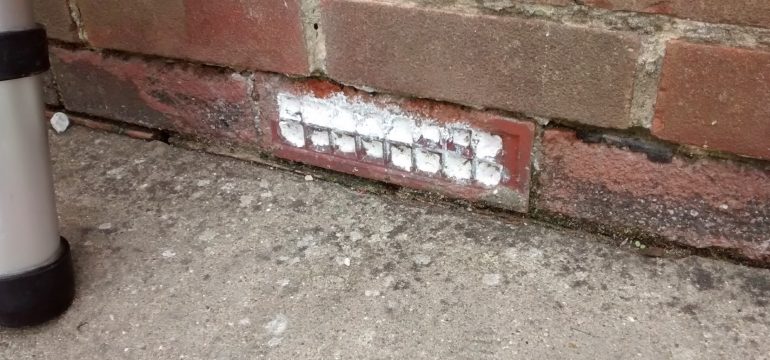

An air brick is a specialised ventilation brick installed in external walls of buildings, often made from clay, plastic or cast iron. Air bricks improve ventilation and reduce moisture build-up inside wall cavities and under floors.
If an air brick becomes blocked, damaged, or is incorrectly installed, moisture can build up beneath floors and inside walls. This creates the ideal conditions for fungal growth, rot and timber decay. Without proper ventilation, trapped moisture can lead to long-term issues.
At Wise Property Care, we often see serious property damage caused by poor subfloor ventilation. These issues can often be identified early through a professional damp and timber survey to find the root cause of issues, such as blocked or insufficient air bricks.

A lack of ventilation and a source of moisture can provide conditions for dry rot spores to germinate and spread
How poor subfloor ventilation can lead to timber decay
Homes and buildings with suspended timber floors rely on cross-ventilation (air entering on one side of the building and exiting on the other) to keep the subfloor dry. When airflow is restricted, damp air can increase moisture levels within a property, creating the perfect environment for fungal growth and timber decay.
Timber decay is common in Scotland due to the prevailing damp weather conditions and popular building materials. Timber decay often develops slowly and out of sight, meaning significant damage can happen before homeowners are aware. As moisture levels rise, fungi break down the timber structure, weakening floor joists, floorboards, and wall plates. Untreated timber decay can compromise the structural safety of a building, increase repair costs significantly, and in severe cases require replacing large sections of flooring or structural timber.
While timber decay is often the visible issue homeowners notice, the underlying cause is often hidden beneath the floor. Fixing damage without addressing poor subfloor ventilation or blocked air bricks can allow the problem to return.
Signs of poor subfloor ventilation
Many homeowners don’t know they have a ventilation problem until visible damage appears or it’s flagged on a homebuyer’s report. Warning signs include musty odours, cold ground floors, creaking or uneven floorboards, black mould on lower walls and skirting boards, and visible fungal growth beneath floorboards.
At Wise Property Care, our team of qualified damp surveyors often diagnose:
- Wet rot caused by persistent moisture exposure
- Dry rot, which can spread aggressively through and beyond timber structures
- General timber deterioration affecting structural stability
Where timber decay or dry rot is identified, Wise Property Care provides specialist timber treatments and structural repairs alongside ventilation improvements, ensuring both the cause and the damage are properly addressed.
It’s important to identify the root cause of damp, such as blocked air bricks or insufficient ventilation, not just the visible damage, or risk the problem continuing.
How air bricks prevent damp and condensation
Air bricks help prevent condensation and damp by improving airflow and reducing moisture levels beneath the property by:
- Preventing subfloor damp
Air bricks help regulate moisture beneath properties by encouraging evaporation and reducing humidity. This prevents water vapour from building in enclosed subfloor spaces, which is a common cause of moisture and damp-related damage.
- Reducing condensation risk
Condensation is common in colder climates like Scotland. By improving airflow within properties, temperature and humidity can be stabilised to lower the risk of condensation forming.
While air bricks can’t solve every damp problem, ensuring they are present and functioning correctly can be an essential tool for managing moisture and preventing damage.
How blocked air bricks can lead to damp and decay
Blocked air bricks are one of the most common causes of poor subfloor ventilation.
Homeowners and tenants often don’t realise how important airbricks are. Concerns over draughts or pests getting in can lead to air bricks being intentionally covered, effectively rendering them useless.
While covering air bricks in winter may seem like a good way to keep heat in, we strongly recommend keeping air bricks uncovered. Blocking airflow can quickly lead to moisture build-up, condensation, and timber decay beneath the floor. Any short-term warmth gained can result in costly long-term damage.
Air bricks are also often blocked accidentally by soil, debris, or paint. Sometimes, new patios and decking completely cover air bricks: stopping ventilation without property owners ever realising they were there in the first place.
How to know if your property has adequate air brick ventilation
The best way to check your property’s ventilation is to speak to a professional. Problems beneath the floor are often hidden, and issues with air bricks may not be obvious.
Many buildings may already have air bricks installed during construction, but these may not be providing enough ventilation to meet modern standards. Air bricks may be incorrectly positioned, damaged, blocked, or there may simply be too few to allow proper airflow.
Retrofitting additional air bricks can often improve subfloor ventilation, but these need to be placed correctly to be effective. Every property is different, so a professional assessment is needed to determine how many air bricks are required and where they should be installed.
Air bricks must also remain clear of obstructions. If your air bricks are covered by debris, furniture, or fencing, removing the blockage may improve airflow. However, damage may already have happened, so it’s important to consult a damp professional to check for any wider issues.
While blocked or poorly positioned air bricks are a common cause of damp and timber decay, there can also be other contributing factors that a professional survey will identify.
How Wise Property Care helps
If you are concerned about damp, timber decay, or blocked air bricks affecting subfloor ventilation in your property, booking a professional survey is the most effective first step.
Early diagnosis of damp, timber decay, and problems with air bricks can prevent costly repairs and long-term damage. If you’re concerned about damp in your home or commercial property, the most effective first step is to book a damp and timber survey.
Wise Property Care’s team of qualified local surveyors provide detailed inspections with specialist tools to assess moisture levels, timber conditions, and signs of decay. All findings are provided in a clear report with evidence and recommendations on next steps.
With decades of experience and coverage across Scotland, Wise Property Care provides professional damp proofing and timber preservation services for homeowners, landlords and commercial clients. Our survey-first approach finds the root cause of problems, before supporting property owners to take the best course of action.
By ensuring air bricks remain clear and subfloor ventilation is properly maintained, homeowners can significantly reduce the risk of timber decay and protect the long-term condition of their property.