

Owning, managing, or conserving a listed or historic building in Scotland is both a profound privilege and a significant property maintenance responsibility. From the iconic sandstone tenements of Edinburgh and Glasgow to grand country estates in the Highlands and Peel towers in the Borders, our architectural heritage is a vital link to the past.
However, these historic structures possess unique traditional building physics that require a completely different maintenance approach from modern construction.
Among all the threats to traditional timber fabric, none is more destructive, aggressive, or legally complex to manage than Dry rot (Serpula lacrymans). For custodians, architects, and landlords of heritage structures, discovering an outbreak can be deeply concerning.
This ultimate guide explores how to identify, manage, and implement professional dry rot treatment within listed buildings while strictly adhering to your legal obligations and preserving priceless historic fabric.
Dry Rot Identification: Spotting the Signs in Old Buildings
Traditional buildings are highly susceptible to dry rot because of their use of structural timber embedded directly into porous masonry walls. To protect these structures, early and accurate dry rot identification is paramount.
Dry rot is a wood-destroying fungal infection that targets the structural components of timber, specifically breaking down cellulose, which gives wood its strength and stiffness.
Despite its name, dry rot cannot start without a source of moisture. However, once established, it can spread rapidly through thick masonry walls and behind plasterwork, transporting its own water source to attack dry timber sections across multiple rooms or floor levels. Its name reflects the dry and friable nature of the decayed wood.
What Does Early Dry Rot Look Like?
Catching an outbreak in its infancy is critical to reducing the cost and disruption of remediation works. Look out for these early signs of dry rot:
- Deep Earthy Odours: A persistent, stale, musty smell that resembles a damp woodland floor is an excellent indicator that active fungal decay is occurring out of sight behind lath-and-plaster walls, timber panelling, or within the solum.
- Timber Deflection: Keep a sharp lookout for skirting boards, door frames, or wood panelling that begins to warp, twist, buckle, or pull away from the wall surfaces.
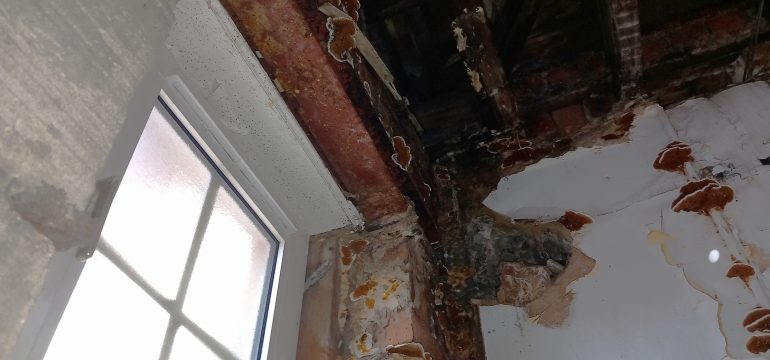
- Fluffy Mycelium Mats: The fungus forms large mats of white-grey fibrous growths that peel like a mushroom. In poorly ventilated voids, the growth is like cotton wool, with sulphur yellow and lilac flashes. The growth can pass through masonry in search of more timber to decay, and this is what makes it so difficult to control.
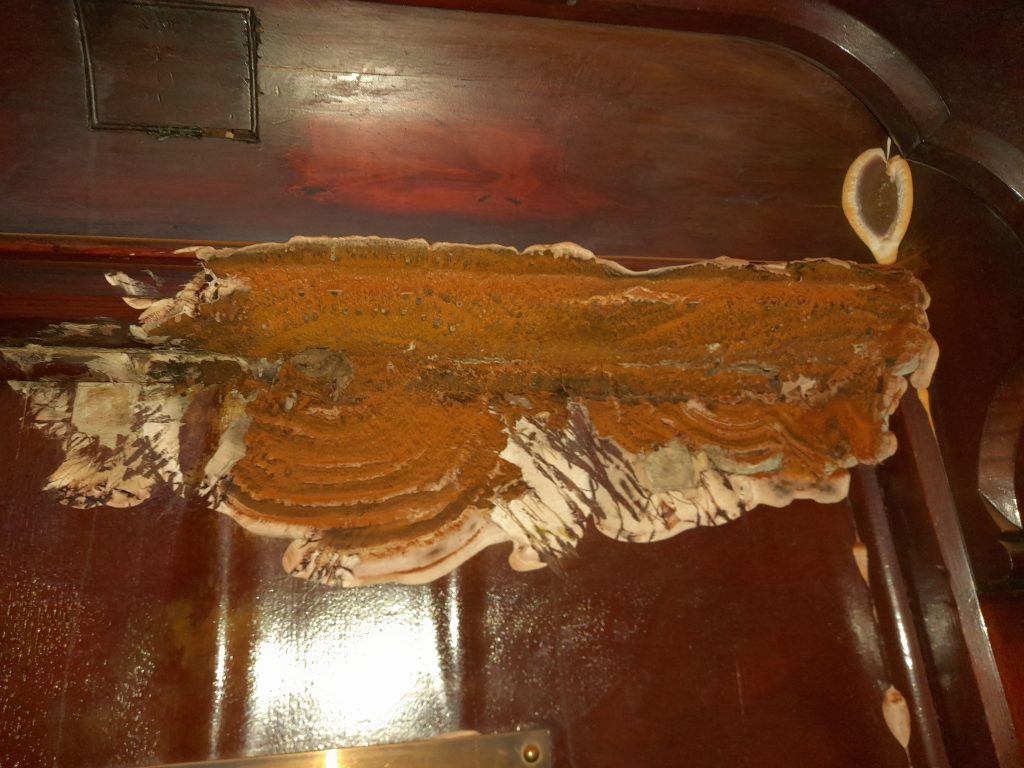
- The Fruiting Body (Sporophore): This is the reproductive organ of the fungus. It presents as a tough, fleshy, pancake-like mushroom structure with a deeply wrinkled, rust-orange centre and a bright white outer margin. These structures then shed spores, which move around a building on air currents.
- Fine Orange Dust Layers: An active infestation will produce millions of microscopic spores that blanket nearby surfaces in a fine, rust-colored or reddish-brown powder.
The Causes of Dry Rot in Historic and Listed Buildings
In the past, wood was kept dry naturally through high levels of ventilation. Traditional buildings were constructed to be completely “breathable” structures. They relied on porous materials like sandstone, brick, and lime mortars to absorb moisture during wet spells and release it naturally via evaporation when the weather cleared. Excess moisture was lost from the building through gaps around glazing or up the chimney, and buildings were generally in equilibrium.
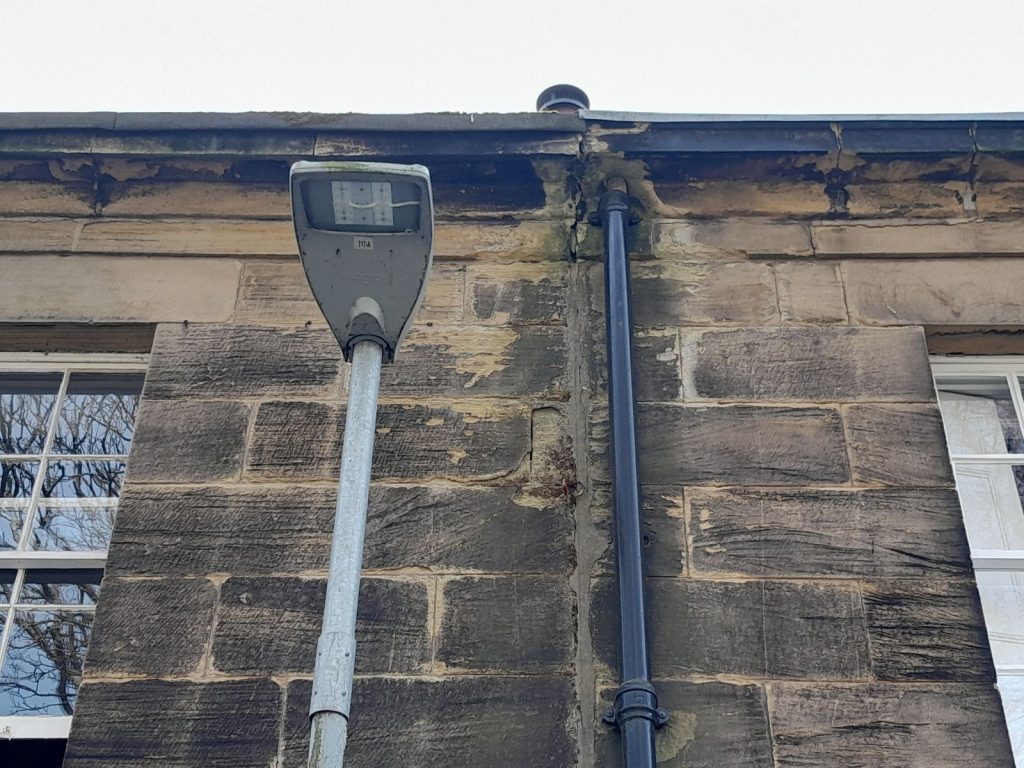
Outbreaks of dry rot in old houses are rarely a random event; they are almost always caused by structural failure that allows moisture ingress or a modern intervention that has disrupted this traditional breathability. Examples include:
- Using Portland Cement: Applying cementitious render or repointing old lime-mortar joints with hard, impervious cement traps moisture inside the wall fabric, allowing it to soak into embedded timber joist ends.
- Applying Modern Paint Systems: Non-breathable vinyl or synthetic paints seal the surface of internal masonry or external render, preventing natural evaporation of excess moisture.
- Inadequate Subfloor Vents: Altering external ground levels by laying new patios or driveways over traditional iron air bricks cuts off the essential cross-flow ventilation required to keep timbers within the solum dry.
Changes in external ground level: Given the age of historic buildings, soil can build up around the base of the walls and this may bridge any dpc. It is also possible that flagstones or setts may be relaid incorrectly and this can redirect water toward the building.
Regulations and Legal Responsibilities for Listed Buildings
When you discover dry rot in a listed building, you cannot simply instruct a contractor to tear down walls – you must navigate strict statutory preservation frameworks.
Most heritage properties are legally protected by listed status, meaning that any physical alterations that affect the character or historic fabric of the building require Listed Building Consent from the local planning authority or Historic Environment Scotland.
Carrying out unauthorised works on a listed building is a criminal offence.
Conservation officers place massive emphasis on three core principles:
- Minimal Intervention: Retaining as much of the original, historic fabric as structurally possible.
- Reversibility: Ensuring that any modern treatments or structural interventions can be removed or undone in the future without causing permanent damage to the original property fabric.
- Material Authenticity: Replacing damaged components only with identical, historically accurate materials (e.g., matching timber species and utilising traditional lime plasters instead of modern gypsum).
Is Dry Rot Covered on Buildings Insurance?
A common query for custodians is whether the extensive costs of dry rot treatment are covered by standard property insurance policy frameworks.
Generally speaking, the short answer is no. Most standard building insurance providers view dry rot as a gradual maintenance issue caused by long-term wear and tear rather than a sudden, accidental event. Because insurance companies expect property owners to keep their properties wind and water-tight, they will rarely cover the cost of fungal remediation unless you can definitively prove the outbreak was the direct result of a sudden, covered incident, such as a major burst pipe.
This makes a precise technical diagnosis and early intervention from a qualified specialist essential to help keep repair costs manageable.
Professional Dry Rot Treatment in Listed Buildings
Remediating dry rot within a heritage environment requires a highly scientific, non-destructive, and cautious approach. The Property Care Association (PCA) outlines professional standards that protect both the building’s structure and its historical value.
Eradicating a dry rot outbreak requires a rigorous, multi-staged approach that addresses the root cause of the moisture ingress, preserving as much of the original building fabric as possible.
Our industry-approved dry rot treatment process follows these essential steps:
1. Locating and Eliminating the Source of Moisture
The first and most critical stage of the process is to stop the source of moisture entirely, as dry rot spores cannot germinate without water. A professional Damp and Timber Survey conducted by a qualified surveyor is used to locate the exact structural defects causing the outbreak. Whether the water ingress stems from leaking lead flashing, a lack of solum ventilation, or underlying damp problems, correcting these faults is the foundation of any permanent cure.
2. Removing Affected Timbers and Fungal Growth
All timbers severely damaged by cuboidal cracking and structural decay must be carefully cut away and removed from the property.
However, if a massive structural beam has suffered decay only at its end where it sits in a damp wall cavity, we do not throw the whole beam away. We precisely cut back only the structurally failed section and construct a traditional timber splice or implement a specialised structural resin repair, saving the majority of the original historic fabric.
3. Decontaminating the Masonry
To ensure the fungal strands hidden deep inside traditional rubble walls or behind lime plaster cannot migrate and re-infect the property, the exposed masonry must be thoroughly decontaminated. Technicians carefully clean down the area before the bare wall surface and surrounding mortar joints are treated with targeted professional biocides to form a secure chemical barrier.
4. Replacing with Pre-Treated Timber
Finally, any removed structural components are replaced with new, sound timber that has been thoroughly pre-treated with high-performance fungicidal preservatives to ensure long-term protection against future wood rot. All cut ends receive secondary treatment.
How Wise Property Care Can Help
Preserving Scotland’s architectural history requires a specialist partner who understands both building physics and conservation requirements. Wise Property Care is the nation’s leading specialist in traditional property preservation.
Unmatched Technical Qualifications
Our network of local branches across Scotland, from Inverness to the Borders, is staffed by highly qualified preservation professionals. Our surveyors hold the industry’s gold-standard qualifications:
- CSRT (Certificated Surveyor in Remedial Treatments)
- CSTDB (Certificated Surveyor of Timber and Dampness in Buildings)
Industry Authority and Compliance
We are proud long-standing members of the Property Care Association (PCA) and are fully accredited by TrustMark. This elite level of membership means you can trust that our advice is completely honest, transparent, and strictly aligned with current heritage preservation best practices and health and safety standards.
We have a proven track record of working seamlessly alongside conservation architects, structural engineers, letting agents, and local planning authorities to deliver compliant, sympathetic remediation schemes for a range of damp and timber issues.
Long-Term Protection
Our dry rot treatments are backed by our industry-leading 20-year guarantees. This provides custodians, property managers, and future buyers with absolute financial peace of mind that the structural integrity of the home is secure for decades to come.
Preventive Measures for Heritage Custodians
To minimise the risk of a devastating dry rot outbreak ever taking hold in your listed property, implement these preventative measures:
- Conduct Bi-Annual Roof Audits: Inspect valleys, lead flashing joints, and chimney crowns every autumn and spring to catch slipped slates before water reaches the timber structure.
- Keep Rainwater Systems Clear: Ensure gutters, hoppers, and downpipes are clear of leaves, silt, and moss to prevent external water overflow from saturating external masonry.
- Maintain Solum and basement Ventilation: Regularly check that external air bricks are clear of soil, plant growth, or debris to keep cross-flow ventilation moving underneath floor joists.
- Monitor Relative Humidity: Utilise modern internal humidity sensors to ensure interior living spaces remain well-ventilated and moisture levels are kept within limits to prevent fungal decay.
Conclusion: Take Action Before the Damage Spreads
Dry rot is a structural emergency that is impossible to resolve with a quick DIY fix or a cosmetic coat of paint. In the delicate context of a listed or historic building, a delayed or wrong intervention can result in the permanent, irreversible loss of precious, irreplaceable historic fabric.
By taking swift, professional, and scientifically backed action, you can protect the structural integrity of your building, fulfil your legal conservation obligations, and ensure your property remains safe and preserved for future generations.
Protect your heritage investment with expert advice you can trust.Worried about dry rot in your listed or historic building? Book a professional survey with Wise Property Care today to secure a tailored, compliant treatment plan for your property.