
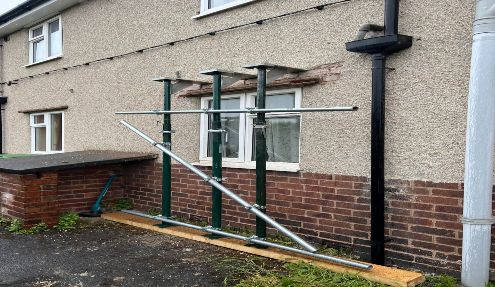

Lintels play a vital role in supporting the structure of your home, but are rarely thought about until visible damage appears. Cracks above windows or doors, movement in brickwork, or issues outlined in a homebuyer’s report can all point towards damaged lintels.
In this guide, we’ll explore the different types of lintel, what lintels are used for, how lintels can fail, and what to do if lintels damage your property.
What is a lintel and what is it used for?
A lintel is a horizontal structural support beam positioned above doors, windows, fireplaces, and other openings. Lintels safely distribute the weight of the masonry above by transferring the load to surrounding walls.
When a lintel fails, pressure can transfer to window or door frames, or brickwork, leading to cracks or other structural damage.
Types of lintel
In Scotland, many different types of lintel are used depending on the age, construction method, or style of a building. Domestic and commercial properties may use different types of lintel due to differing load requirements or materials used when building.
Understanding the type of lintel present is an important first step when assessing damage caused by cracked lintels or lintel failure.
Timber lintels
Timber lintels are commonly found in older properties, and are less frequently used in new constructions due to their susceptibility to moisture. Timber lintel damage is often caused by damp, so identifying and tackling moisture is essential to prevent further deterioration.
Common concerns include:
- Timber decay and rot caused by persistent moisture and fungal decay
- Loss of structural integrity over time
- Deterioration hidden behind finishes
- Insect-related damage, including woodworm
Steel lintels
Steel lintels are often used in modern construction due to their strength and durability. They are often able to support heavier loads than some other types of lintel because of their strength.
Common concerns include:
- Corrosion due to moisture
- Deterioration of protective coatings
- Expansion from rust putting pressure on surrounding walls
Concrete lintels
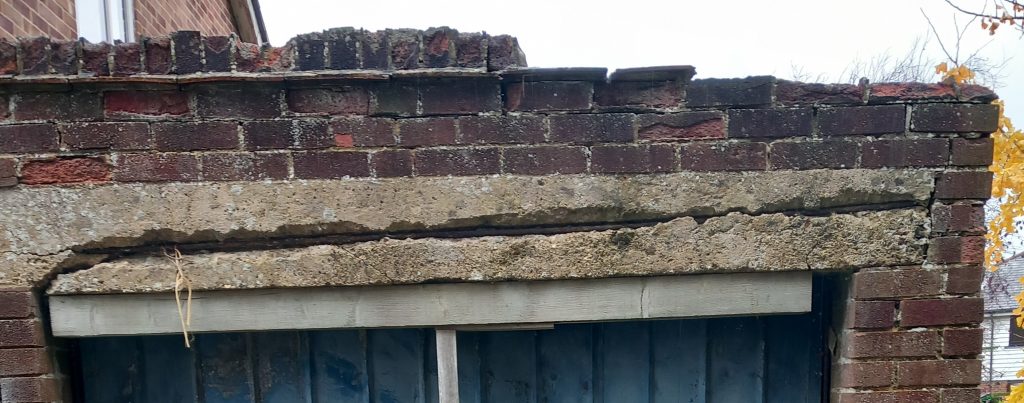
Concrete lintels are commonly found in post-war homes, as well as newer developments. They may be solely concrete lintels, or reinforced with steel bars.
Common concerns include:
- Cracking associated with structural movement
- Surface deterioration caused by frequent exposure to moisture
- Corrosion in reinforced concrete lintels
Stone lintels
Stone lintels are typical of historic buildings and traditional properties, but rarely used in new construction.
Common concerns include:
- Load-related cracking
- Weathering and erosion
- Movement caused by structural changes or settlement
Brick lintels
Brick lintels are often found in older or mid-20th-century properties and are typically reinforced with embedded steel bars. They combine the aesthetics of brickwork with additional structural support from the steel, making them suitable for smaller openings or decorative features.
Common concerns include:
- Steel corrosion in reinforced brick lintels
- Cracking in surrounding brickwork
- Reduced structural strength over time
Properties without lintels
In some older buildings or those constructed without an experienced builder, windows, doors or other openings may have been installed without suitable lintels in place. Windows and doors added without lintels may mean pressure is passed onto the wooden frame or surrounding masonry, which can cause damage over time.
Why failing or cracked lintels need prompt attention
Lintel problems rarely fix themselves, and ignoring them can lead to serious structural issues. A failing or cracked lintel can transfer the load to surrounding masonry, which can cause cracks above windows and doors, bowing brickwork, and misaligned frames. Over time, this can escalate into extensive damage that needs expensive repairs.
Common lintel problems that require investigation
Lintel failure can cause significant structural damage, but it isn’t always easy to spot lintels as the cause behind a crack.
Warning signs that lintels may be failing include:
- Diagonal ‘stepped’ cracking above windows and doors
- Cracking along brick courses
- Bowing or sagging masonry
- Rust staining on external walls
- Internal plaster cracking
- Doors or windows becoming difficult to open or close
While these symptoms may be down to lintel failure or cracked lintels, they could also be caused by moisture, building movement, or other structural defects. This means it’s incredibly important for any underlying causes to be diagnosed by a professional before attempting or outsourcing any repair work.
Once cracks appear, lintels must be repaired or risk further cracking, structural damage, or even requiring a complete rebuilding of the brickwork.
Understanding lintel repair options
Lintel repairs can vary depending on the type of lintel installed, the extent of deterioration, and the underlying cause behind the damage.
1. Start with a Survey
Lintel repairs vary depending on the type of lintel and the extent of the damage, so a professional survey is essential before any repair strategy is considered. This means any issues with lintels can be identified and tackled before they escalate.
While urgent remedial work isn’t always necessary, having a professional survey gives property owners the piece of mind to make informed decisions on the safety of their property.
2. Repairing lintels
Damaged lintels don’t always need to be replaced, and may be able to be repaired if damage is minimal. Repair work often has less disruption on a property, but it’s often better to replace lintels entirely.
Repairs differ based on the type of lintel. Timber lintels can be repaired by treating decay, replacing sections of timber, or reinforcing the beam. Steel lintels may need rust treatment or strengthening. Repairs for concrete lintels may need patching or reinforcing. A professional survey will make sure any repair is tailored to the lintel type and property to provide a long-term solution.
3. Replacing lintels
If a lintel is severely damaged, it may need to be removed and replaced. Replacing lintels means choosing a type of lintel to work within your property, taking into account the look and structure of the property.
Lintel replacements and repairs should always be completed by a professional, with exterior walls supported and masonry removed before fitting a new lintel.
How Wise Property Care can help
If you’ve noticed cracking above windows or doors, movement in masonry, or have received a survey report highlighting possible lintel issues, professional assessment is the safest first step.
Wise Property Care offers specialist lintel surveys across Scotland, providing expert diagnosis and clear recommendations for long-term structural stability. Our locally-based surveyors inspect internal and external areas to assess the extent of damage, and provide recommendations for any necessary repairs. Where repairs or replacements are needed, our trained professionals carry out the work to restore stability.
Book your lintel survey today to protect your property and restore your peace of mind.