

How to Identify and Treat Woodworm in Furniture with Woodworm in Furniture: Identification, Treatment, and Prevention
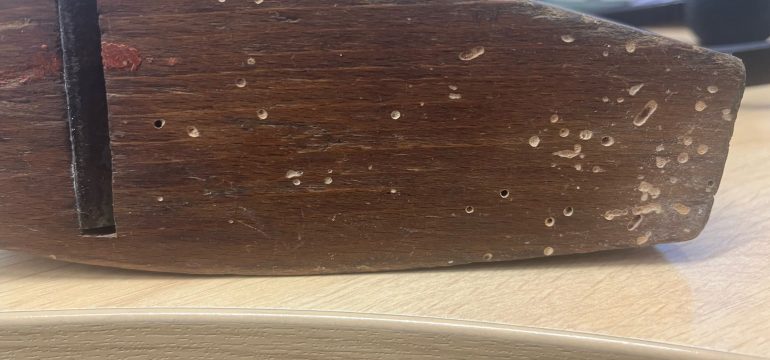
Few things match the excitement of discovering a beautiful piece of second-hand timber furniture, inheriting a beloved antique family heirloom, or uncovering a rustic wooden gem in a vintage shop. However, that excitement can quickly turn to anxiety when a closer inspection reveals a scattering of tiny, mysterious, round holes across the wood surface.
In Scotland, these holes are the classic warning sign of a woodworm infestation. Left unchecked, wood-boring insects can silently destroy the structural integrity of your valuable furniture and, in worst-case scenarios, put your broader property fabric at risk.
Understanding how to identify woodworm in furniture, what causes it, and how to safely treat the problem ensures your treasured pieces remain protected for generations.
Identifying the Culprit: What is Woodworm?
Despite its deceptive name, woodworm is not actually a worm at all. The term is a collective term used to describe the larval stage of various species of wood-boring beetles.
The Lifecycle of the Common Furniture Beetle
The most frequent offender found inside UK households is the Common Furniture Beetle (Anobium punctatum). Its destructive lifecycle follows four main structural phases:
- Egg Laying: Adult beetles lay their eggs directly on the surface of rough-sawn timber or inside rough, unpolished cracks, crevices, or old flight holes on timber.
- The Larval Stage (The Damage): Once hatched, the tiny larvae burrow into the timber, often staying within the nutritious sapwood or, in the case of ply drawer bases, eating each layer in turn. This larval stage is the actual “woodworm”. They spend years eating their way through the interior woodwork, chewing out hidden maze-like structural tunnels.
- Pupation: The larvae eventually move close to the surface of the wood and form a pupal chamber to transform into adult beetles, in the same way a butterfly caterpillar becomes a chrysalis and then emerges as an adult.
- The Flight Stage: The newly formed adult beetle chews through the remaining thin veneer of wood, creating the characteristic round exit hole to crawl away, locate a mate, and restart the cycle. In the right conditions, they can also fly and are often found attracted to the light at windows.
How long do woodworm live inside furniture?
The destructive larvae can live and feed silently inside your woodwork for three to five years before finally pupating and emerging as adult beetles. This means that by the time you spot the visible exit holes on the outside of your table or chair, an active infestation has been chewing through the inner structural fibres for half a decade.
How Can You Tell if Furniture Has an Active Woodworm Infestation?
Determining whether you are looking at old, historic damage or an active, spreading woodworm infestation is critical to deciding your next steps.
Look out for these primary physical and visual signs to see if furniture has woodworm:
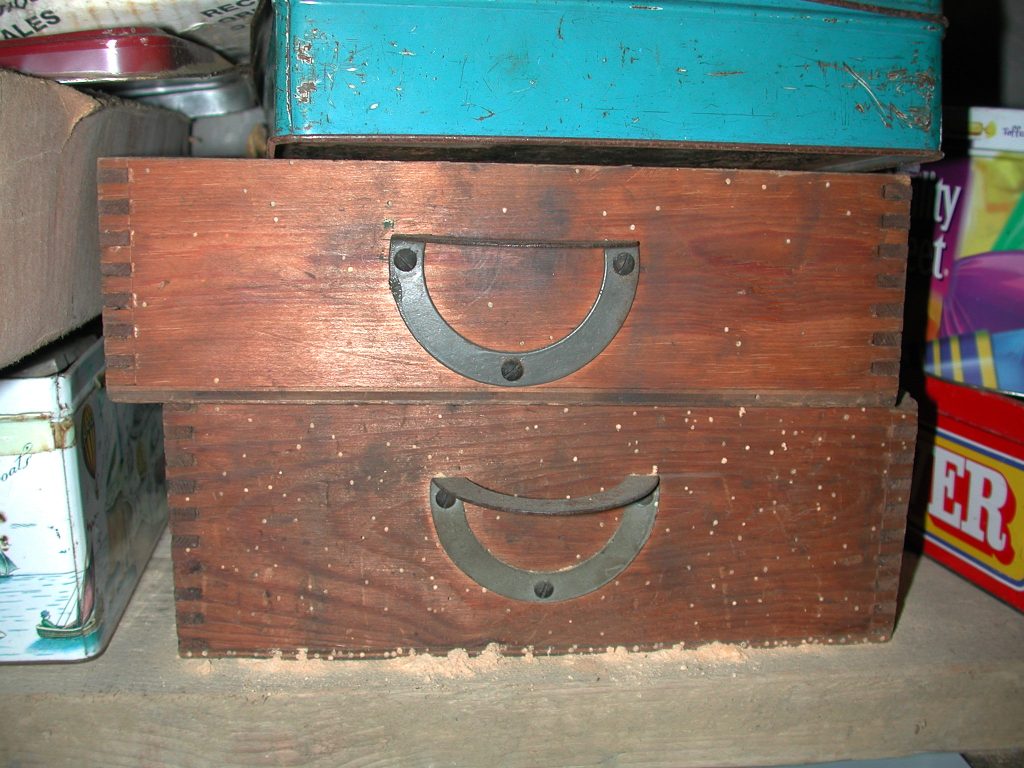
- Tiny Round Exit Holes: Fresh holes are typically 1–2mm in diameter, crisp around the margins, and expose clean, light-colored raw wood inside the puncture. There will be no dust or cobwebs.
- Bore Dust (Frass): This is the single definitive sign of an active infestation. Frass is a fine, powdery dust that resembles light-coloured wood shavings or fine sand, left behind as the larvae push waste out of their tunnels. You will find fresh frass accumulating on ledges or floors, directly beneath or around the exit holes.
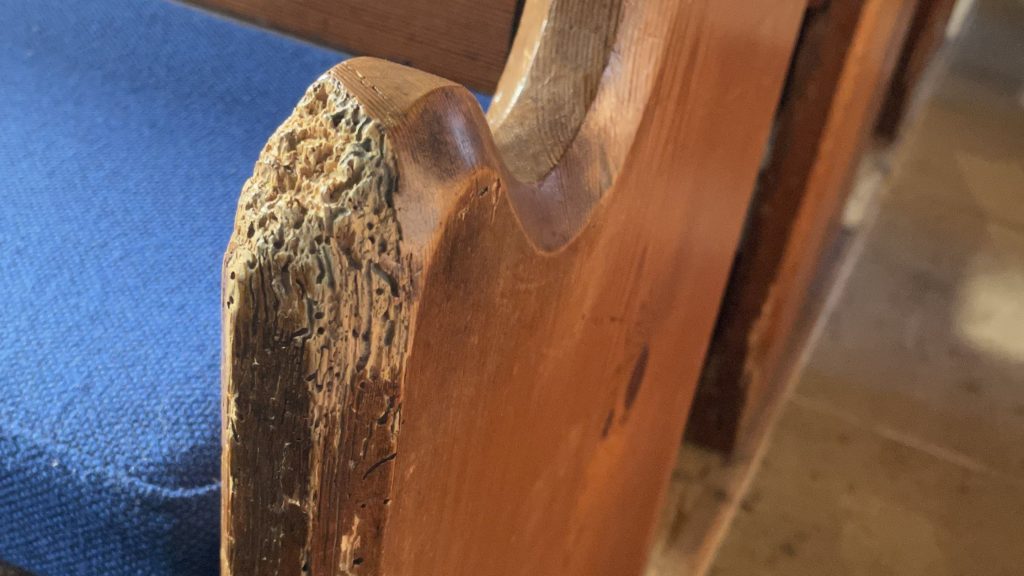
- Weakened, Crumbling Timber: If the internal tunnelling is advanced, the edges of your wooden furniture may start crumbling away completely, feeling uncharacteristically soft, brittle, or structurally spongy under hand pressure.
- Live Adult Beetles: Spotting live adult beetles emerging from the wood fabric is definitive proof of an active infestation. In Scotland, the “emergence season” occurs between April and September, when adult beetles leave the timber to locate mates.
Can Woodworm Spread From Furniture to the House?
When homeowners discover infested furniture, their immediate concern is: “Can woodworm spread from furniture to the house?”
The short answer is yes, they can. Adult beetles can crawl and fly and will readily travel from an infected antique chair to settle on structural elements like your floor joists, staircases, or roof rafters. They can also go from housing timbers to furniture, but this is less common, as furniture is often too dry, unless stored in damp rooms.
However, the beetle larvae require a specific moisture threshold to successfully survive and burrow into wood. The common furniture beetle prefers timber with a moisture content above 12%. In modern, warm, centrally heated homes, the structural timber is usually too dry for the larvae to thrive. However, that depends on where the timber is located and the sources of damp. The underside of a suspended timber floor is often damp if ventilation is compromised. Wood in a cool house is often around 15%. The availability of sapwood is also important, as heartwood will generally not be eaten unless it has become very damp.
How to Treat Woodworm in Furniture
The method used for treating woodworm in furniture will depend on the size and extent of the woodworm infestation.
1. DIY Methods (For Small, Non-Structural Items)
If the infestation is confined to a small, modern, non-structural item, such as a picture frame, a small stool, or a wooden bowl, you can often apply DIY methods. This involves purchasing a surface-applied, water-based insecticide designed specifically to kill wood-boring insects.
Ensure the wood is bare (stripped of varnish or paint) so the fluid can soak effectively into the entry and exit holes.
2. The Risks of DIY on Antiques and Fine Finishes
If your infested item is a valuable heirloom, a rare antique, or a piece with an intricate historic finish, DIY chemical treatments could pose a risk. Water-based preservatives can become trapped below the surface finish and lift it or darken the wood.
Valuable antiques require specialised, non-destructive remediation techniques, such as controlled atmosphere or specialised treatment chambers, to kill the larvae safely without contacting delicate surface varnishes.
3. Professional Timber Treatment and Structural Surveys
When an infestation has taken hold in large furniture items, or if you suspect beetles have already begun emerging and migrating into your flooring or structural timbers, professional intervention is recommended.
How Wise Property Care Can Help
If you are worried about a woodworm problem, Wise Property Care is here to help.
Wise Property Care can provide you with specialist treatments, providing comprehensive solutions for homeowners, landlords, and social housing providers.
- Gold-Standard Qualifications: Our local surveyors hold the industry’s benchmark certifications: CSRT (Certificated Surveyor in Remedial Treatments) and CSTDB (Certificated Surveyor of Timber and Dampness in Buildings).
- National Reach, Local Expertise: With specialised local branches stretching across Scotland, providing rapid, responsive assistance tailored to the unique demands of your property.
- Governing Body Credentials: We are long-standing members of the Property Care Association (PCA) and are fully accredited by TrustMark, ensuring all surveys and treatments conform strictly to industry best practice guidelines.
- Long-Term Financial Peace of Mind: Our structural timber treatments are typically backed by our comprehensive, industry-trusted 20-year property guarantees, ensuring your home stays protected for decades to come.
Conclusion: Act Early to Protect Your Home
Catching woodworm early is the single most effective way to protect your valuable heirlooms and safeguard your property’s structural integrity before beetles migrate into structural timber.
Whether you need to verify if an old chest of drawers is safely inactive, or you are worried about damp tenement conditions encouraging beetles to spread into your floorboards, an accurate diagnosis is the foundation of a permanent cure.
Concerned about a potential woodworm infestation spreading in your home? Book a professional timber survey with Wise Property Care today to secure your property’s value.