
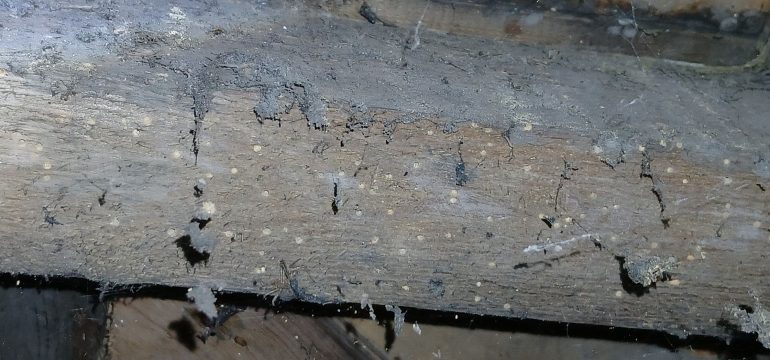

Woodworm doesn’t appear at random. It’s caused by wood-boring beetles finding timber conditions where they can lay eggs, usually in damp or untreated wood. The hatching larvae then eat their way through timbers, creating tunnels and holes that can weaken timber from the inside.
Finding small holes in your floorboards, furniture or timber is often the first sign you may have an infestation of woodworm. Left untreated, woodworm can cause significant damage: weakening joists, floorboards, and roof timbers over time.
Understanding the causes of woodworm and how it spreads makes it easier to tackle effectively. With the right professional advice, it’s a problem that can be identified, tackled, and solved for the long-term.
The Causes of Woodworm
Woodworm starts when adult wood-boring beetles find timber that is suitable for laying their eggs on. The larvae that hatch from the egg spend the next three to five years tunnelling through timber. They then pupate and an adult beetle is formed which emerges from a flight hole that can be seen on the surface. This means most homeowners don’t spot the key signs of woodworm until the infestation is already well established.
The main causes of woodworm are:
- Damp or high-moisture timber
- Untreated or rough-sawn timber
- Poor ventilation
- Infested items brought into a property
Getting to the root cause matters when treating a woodworm infestation. Properties can be vulnerable to reinfestation if the reason behind it isn’t addressed.
How the Type and Condition of Timber Can Lead to Woodworm
Not all timber is attractive to wood-boring beetles. High-quality hardwood tends to be less vulnerable than older, lower-grade softwoods. Damp timber is also extremely attractive as it is easier for larvae to bore through and provides a water source, so adult females seek this out when laying eggs.
Most species target sapwood (the outer layer of a tree) because it is softer, more nutritious, and easier for larvae to feed on. Denser heartwood from the core of a tree is naturally more resistant to woodworm.
Untreated and rough-sawn timber can be high-risk for woodworm. Adult beetles need cracks, crevices, and rough fibres to lay their eggs on. Smooth surfaces make this a lot harder.
Painting or varnishing timber can help protect against beetles laying eggs on the surface, but can’t stop an infestation that is already underway. Larvae already inside will continue tunnelling, and the adult beetles will bore straight through the coating to emerge.
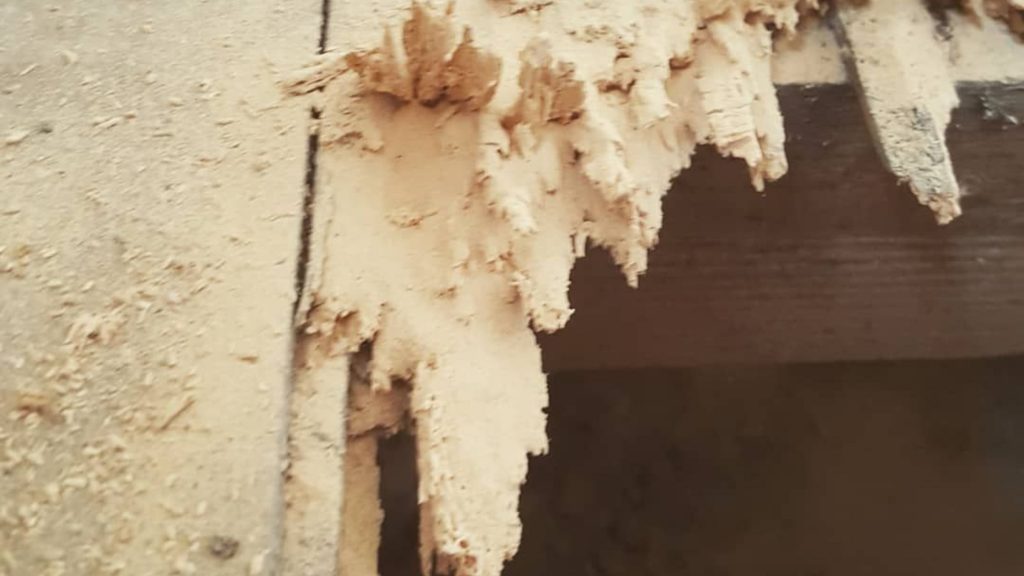
Woodworm can cause severe damage to timber If left untreated.
How Does a House Get Woodworm?
There are two main routes to woodworm.
1. Beetles flying or crawling in from outside
Between April and September, adult beetles emerge from timber to mate and find places to lay their eggs. Open windows and doors during these warmer months give them easy access.
2. Infested items brought into the property
This is actually the more common route to woodworm, and one that catches a lot of people off guard. Woodworm can arrive via:
- Second-hand furniture and antiques
- Reclaimed timber used in renovations or refurbishments
- Firewood stored indoors
As woodworm larvae remain hidden inside timber for most of their lifecycle, an infestation can be well established long before any signs appear on the surface.
This means that even when homeowners closely inspect antiques or property, woodworm larvae may already be hidden within.
How Does Woodworm Spread?
A woodworm infestation doesn’t just stay in one place. There are two ways it spreads:
1. Within a Property
Adult beetles emerge from infested timber and look for new surfaces to lay eggs on. Drawn to light, they can often be spotted near windows, but will lay eggs on any suitable timber.
An infestation that starts in a sub-floor void can soon work its way into joists, floorboards and other structural timber over successive life cycles, each lasting three to five years. This can become a long-term problem with frequent recurrences as the beetles spread eggs over time.
If you suspect a piece of furniture has woodworm, move it away from other timber until it has been treated to limit the chances of it spreading.
The risk of spread is particularly worth taking seriously in commercial refurbishments, where large areas of timber may be exposed, allowing egg-laying adults to easily lay eggs in multiple areas.
2. Between Properties
Once adult beetles have emerged from timber, they can fly or crawl between buildings. This mostly happens in the flight season between April and September.
In terraced streets or flats where properties are close together, an untreated infestation in one home can spread to neighbours over time through the sub-floor space or roof void.
How to Stop Woodworm Spreading
The most effective way to stop woodworm spreading is to identify an infestation early.
Whether you’ve spotted signs of woodworm in your home or picked it up on a homebuyer’s report, a professional damp and timber survey is always the best first step.
Wise Property Care’s qualified surveyors will:
- Identify the species and confirm whether the infestation is still active
- Assess moisture levels and timber condition throughout the property
- Accurately diagnose the root cause of your woodworm infestation
- Provide a clear and detailed report with tailored treatment recommendations to tackle existing infestations and stop woodworm spreading
Where woodworm treatment is required, this typically involves applying specialist insecticides to affected areas, replacing any timber that has lost its structural integrity, and tackling damp and ventilation issues that attract woodworm.
We’ll never recommend treatment where it isn’t needed. Our qualified surveyors have been helping homeowners and commercial property owners protect their properties for over 25 years. Book a damp and timber survey with Wise Property Care today.
Frequently Asked Questions on Woodworm
What causes woodworm in floorboards?
Floorboards are one of the most likely places for woodworm to be found. The root cause of woodworm in floorboards is often due to poor sub-floor ventilation leading to the high levels of moisture that wood-boring beetles love. Because the infestation develops out of sight on the underside of floorboards, it can cause significant damage and weakening before any signs appear on the surface above. If your floorboards feel springy or uneven it’s worth having them professionally inspected for woodworm or other timber and damp-related issues.
Does woodworm mean I have a damp problem in my home?
Woodworm doesn’t always mean you have damp, but it is highly likely. Wood-boring beetles thrive in moist and humid conditions, and like to lay eggs on damp timber. Some species, such as the wood-boring weevil, will only infest timber that is already damp and affected by fungal decay. However, others like the common furniture beetle can survive at lower moisture levels, so may start their infestation even if there isn’t underlying damp. If woodworm are identified in your property, a professional surveyor will also check for any associated damp problems that likely led to the infestation in the first place.
Can woodworm spread from furniture to structural timber?
Yes, woodworm can spread from furniture to timber (and vice versa). Adult beetles emerging from infested furniture will look for timber nearby to lay eggs on, and structural timber such as floorboards and joists can be as attractive as furniture. If you suspect a piece of furniture is affected, move it away from other timber where possible until it has been assessed and treated by a professional.
Is woodworm more common in Scotland?
Woodworm is found in many countries, but Scotland’s damp climate can create conditions where woodworm thrives. The moisture content of timber in older properties can rise in sub-floor spaces, wall cavities, and lofts. The wood-boring weevil, common furniture beetle and forest longhorn beetle are all common in Scotland.