

Discovering damp patches spreading across internal walls, peeling wallpaper, or flaking plaster is a concerning experience for any property owner. It is easy to feel overwhelmed, especially when deciding how to fix the problem without wasting money on temporary quick fixes.
Attempting to treat dampness with over-the-counter damp-proofing paints or hasty DIY repairs often masks the issue without resolving the root cause.
A professional damp survey, often known as a damp and timber survey, will replace guesswork with clear diagnostic evidence, identifying the exact source of moisture and securing your property’s long-term value and safety.
What is a Damp Survey and When Do You Need One?
A specialist damp survey is an in-depth assessment of a property’s building fabric, both inside and outside. The survey is designed to identify the presence, exact cause, and extent of unwanted moisture or timber decay, and provide recommendations on how to prevent any issues found.
Unlike a general home report, a dedicated damp survey focuses specifically on how moisture can enter the building, environmental conditions, and the condition of timber. You typically need to arrange a specialist damp inspection when experiencing any of the following:
- Visible Signs of Damp: Tide marks on internal walls, dark damp patches, crumbling plaster, or blistering paintwork.
- Musty and Mouldy Smells: A heavy, persistent, musty smell lingering in living spaces, subfloor voids, or built-in cupboards.
- Timber Damage: Wood rot on skirting boards, springy floorboards, or fungal growth appearing around window frames can indicate a serious issue.
- Issues Flagged in a Home Report: Issues raised on a pre-purchase survey or a Home Report, where a general surveyor suspects damp or timber issues and recommends a more in-depth inspection by a specialist.
How to Choose a Qualified Damp Expert: Credentials That Matter
When booking an inspection, understanding the difference between a qualified specialist surveyor and a general builder is vital.
General contractors often lack specialised diagnostic tools and may recommend invasive, costly treatments rather than fully investigating the root cause of the damp problem. Often damp can be solved by simple ventilation adjustments or external gutter repairs rather than the need for damp proofing treatments.
A qualified damp expert will always provide honest and reliable advice and recommendations, and where no work is required, this will be made clear.
Are Damp Specialists Worth It?
Yes. Engaging a qualified damp expert is always worth the investment. A specialist provides an accurate, defensible diagnosis that prevents you from spending thousands of pounds on unnecessary work. Look for surveyors holding recognised industry credentials:
- PCA Membership: Accreditation by the Property Care Association (PCA), the UK’s leading trade association for property preservation.
- CSRT and CSTDB Qualifications: Certificated Surveyor in Remedial Treatments, proving advanced expertise in diagnosing timber decay and dampness, and Certificated Surveyor of Timber and Dampness in Buildings, the current gold-standard qualification for damp and timber specialists.
- CSSW: Certificated Surveyor in Structural Waterproofing, essential if your survey involves below-ground basement or cellar waterproofing.
- Online Reviews: Make sure to check business reviews on websites such as Trustpilot to understand the previous experience of independent customers.
The Damp Survey Process: Step-by-Step
Understanding the damp survey process helps you know what to expect when a specialist visits your property. A comprehensive inspection follows three stages:
Step 1: External Assessment
A qualified damp expert always starts on the outside of the building. External structural defects are the primary driver behind internal dampness. The surveyor will inspect:
- Ground Levels and DPC: Checking if external flowerbeds, paths, or driveways sit too high, bridging the existing damp-proof course (DPC), if present.
- Rainwater Goods: Examining roof slates, gutters, hoppers, and downpipes for leaks, blockages, or overflow marks.
- Subfloor Airbricks: Verifying that subfloor ventilation vents are clear, unblocked, and allowing sufficient cross-flow air beneath suspended timber floors.
- Exterior Masonry: Inspecting brickwork, stone, rendering, and window seals for cracks, spalling, or eroded mortar lines.
Step 2: Internal Inspection
Moving indoors, the surveyor evaluates the affected living spaces, checking internal walls, ceilings, flooring, and skirting boards. They inspect behind furniture where possible, examine window sills for condensation pooling, check subfloor voids, and evaluate background ventilation systems like trickle vents and extractor fans.
Step 3: Diagnostic Testing
To pinpoint the source of moisture, surveyors will utilise non-invasive, specialised diagnostic tools where required:
Electronic Moisture Meters: Calibrated surface meters and deep-wall resistance probes trace moisture profiles across wall surfaces. These are calibrated for use on timber, but can be used at regular intervals to suggest levels of moisture within masonry and plaster.
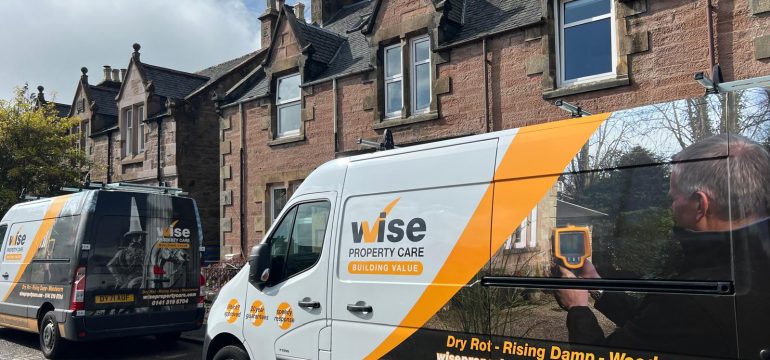
- Thermal Imaging Cameras: Advanced diagnostic imagers detect temperature differences on surfaces and can identify cold spots and hidden thermal bridging where airborne water vapour can condense.
- Thermohygrometers: Measuring relative humidity, air temperature, and dew point to evaluate atmospheric condensation risks.
Are Damp Surveys Invasive?
Homeowners frequently worry about damage to their decor. The vast majority of a damp survey is completely non-destructive, relying on the surveyor’s experience and use of optical, thermal, and electronic tools.
Where there are hard-to-reach or hidden areas with suspected timber decay, surveyors can lift floorboards to inspect joists or drill mortar samples for carbide testing. These checks are only carried out with the property owner’s explicit permission when structural timber decay or internal damp is suspected.
Diagnosing Moisture: Rising Damp, Penetrating Damp, or Condensation?
A primary function of a damp survey is correctly differentiating between the three main forms of dampness, as well as ruling out simple plumbing leaks:
- Rising Damp: Groundwater travelling vertically up through porous masonry via capillary action. A surveyor identifies rising damp by checking for low-level damp grading out up a wall, salt efflorescence bands, and horizontal tide marks running continuously along lower walls, usually up to one metre in height.
- Penetrating Damp: External water forcing its way laterally through defective walls or roofs. The surveyor looks for localised damp patches that expand following heavy rain, often corresponding directly with external masonry defects or leaking downpipes.
- Condensation: Atmospheric moisture condensing into liquid water on cold internal surfaces due to poor ventilation. A surveyor verifies condensation by checking relative humidity levels, detecting cold bridging and spotting black spot mould clustering on window frames and high ceiling corners.
Identifying Timber Decay
During the inspection, the damp surveyor also checks adjacent wood for signs of timber decay. They test skirtings and joists for wet rot (localised softening caused by high moisture) and screen for aggressive dry rot (Serpula lacrymans), checking for grey mycelial mats, cuboidal cracking, or rust-coloured spore dust.
What Does a Damp Survey Report Include?
Following the physical inspection, the surveyor compiles an official written damp survey report. This comprehensive document includes:
- Detailed mapping of the affected areas and electronic meter readings.
- Clear explanation of why the dampness is occurring (e.g., bridged DPC, penetrating damp, or atmospheric condensation).
- Step-by-step physical recommendations to fix the underlying defects and restore the property, if required.
- Details will be provided of the costs for any necessary remedial works, provided only where treatment is genuinely required.
- The survey report will also detail any long-term guarantees applicable to the work being carried out. Wise Property Care typically provides a 20-year guarantee for damp proofing.
How Long Does a Damp Survey Take?
The physical survey usually takes between 1 and 2 hours to complete, depending on the size of the property. This will vary for larger properties or commercial premises. You can expect to receive your official written report within 2 to 4 working days following the inspection.
Damp Survey Costs and Negotiation: What Happens If Damp is Found?
Survey fees vary based on property location and size, typically ranging from £150 to £400 for a detailed specialist survey.
When purchasing a home, the buyer usually pays for the specialist damp survey, as it serves to protect their financial investment and provide independent evidence.
What Happens If a Surveyor Finds Damp?
If damp is uncovered during a pre-purchase survey, you have strong commercial options:
- Renegotiate the Purchase Price: Use the itemised repair costs in the survey report to request an equivalent deduction from the house sale price.
- Vendor Repair Agreements: Require the seller to complete the specialist remedial work using a PCA-accredited contractor before exchanging contracts.
- Resolve Mortgage Retentions: Presenting the specialist report to your mortgage lender demonstrates that the issue is accurately costed and managed, helping to release any withheld mortgage funds.
How Wise Property Care Can Help
Accurately diagnosing property moisture across Scotland’s challenging climate requires an expert partner with proven credentials. Wise Property Care operates a comprehensive network of local branches across Scotland, bringing deep regional expertise to every inspection.
Our team of qualified surveyors holds gold-standard CSRT and CSTDB certifications, ensuring your home receives an accurate, honest diagnosis without unnecessary repair recommendations.
As PCA-accredited specialists, our remedial damp proofing and structural timber treatments are executed to the highest industry standards and backed by our long-term property guarantees, providing total financial security for your investment.
Conclusion
A professional damp survey replaces worry and guesswork with clear diagnostic evidence. By understanding the survey process, checking credentials, and securing an accurate report, you can tackle moisture issues at the source, protect your health, and safeguard your property’s value for the future.