
For your Local Experts call us on 0808 301 8231 or Book A Survey Online
Anti Condensation Paint for Walls
Anti condensation paints can stop condensation forming on cold spots on walls and ceilings, helping prevent mould growth and unpleasant living conditions.
Condensation is the most common type of damp affecting homes in Scotland, and can cause mould growth if left untreated. It will lead to unsightly damage to the surface of walls, deterioration of wallpaper and even health problems.
Condensation can form on walls and surfaces because of thermal bridging, so as the temperature drops outside, a cold spot on the wall develops. This causes warm air inside the property to condense on the surface, causing condensation and ultimately mould growth.
Anti condensation paints can be used to prevent cold spots in the home, making it a useful product for condensation and mould around windows, in isolated areas or in places which cannot be insulated in other ways.
Sometimes condensation can be caused by leaks or penetrating damp, so it's important to know what the root cause of the problem is before carrying out treatments.
This is why it is important to first have a damp and timber survey carried out by a professional, in order to accurately diagnose the type of damp affecting the property, so any treatments will work long term.
Applying Anti Condensation Paint
In order to provide you with recommendations for a condensation problem, we would first carry out a damp and timber survey in order to determine the root cause of the issue, and to assess other factors that may be causing damp problems both internally and externally.
You will receive a detailed survey report with the surveyors findings, identifying the source of the damp problem, along with any recommendations for treatments. If anti condensation paint is required, this will be detailed.
If you would like to go ahead with an application of anti condensation paint, a trained technician will arrive at the property at an agreed time, and begin carrying out the treatment.
They will prepare the surfaces ready for treatment. If the wall is damp then an appropriate mould eradication solution will be used.
If there is damaged or deteriorated wallpaper this will be stripped back, so the full area can be cleaned and sanded, to prepare a smooth flat surface.
Once the surfaces have been prepared, the application of anti condensation paint can take place. Once the first coat has dried (typically around 4 hours) a second can be applied.
After the area has fully dried it can be painted or wallpapered over, as the thermal layer is insulating underneath.
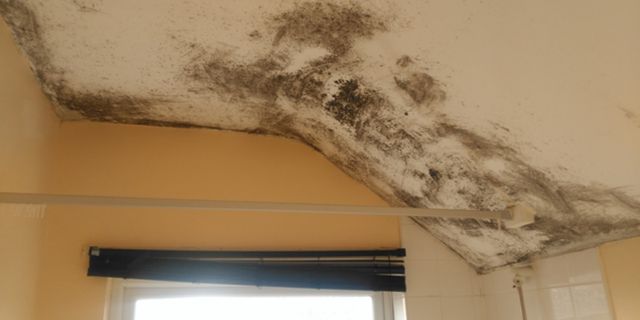
Before - black mould can form on cold spots on walls, ceilings and around windows, such as this eaves void.

After - anti condensation paints help create a thermal barrier to prevent a thermal bridge, stopping condensation forming and mould growing.
Expert Anti Condensation Paint Installers
If you are suffering with condensation and mould on walls in your property and would like specialist advice and long term solutions, Wise Property Care are here to help.
We have a number of CSRT and CSTDB qualified surveyors who will accurately diagnose your damp issues, and if required, our expert technicians can apply anti condensation paint.
They will talk you through the process from start to finish, while ensuring that you face minimal disruption. If required, our technicians are equipped with protective floor coverings, Hilti dust extraction units and vacuums in order to keep your property clean and tidy.
Benefits of Anti Condensation Paints
Anti condensation paints work differently to more typical fungicidal or mouldicidal paints which are available in hardware stores. These contain a fungicide to kill mould on the surface over an extended period - but do not address the cause of the condensation - the cold surface and excess humidity. Anti condensation paint will prevent the cold spot long term, helping prevent the problem from occurring.
Benefits of Anti Condensation Paints
- Anti condensation paint will prevent condensation forming, and inhibit mould and fungal growth.
- Useful for isolated areas of condensation or mould caused by a thermal bridge.
- It can be used for areas that are difficult to insulate such as eaves voids or sloping ceilings.
- Can be applied directly on a range of surfaces.
- Can be painted or wallpapered over once applied
- Prevents heat escaping through cold walls, helping to reduce heating bills
- Perfect for kitchens, bathrooms, utility rooms and lintels over doors or windows that suffer from cold bridging.
Anti Condensation Paints FAQs
-
Do Anti Condensation Paints Work?
Yes, anti condensation paints work by stopping moisture vapour in the atmosphere from condensing on cold surfaces on which it is applied. It creates a thermal barrier between the cold surface and the warm inside air, meaning that thermal efficiency is increased, and the cold spot no longer causes the warm air to reach dew point and turn into liquid.
The warm air will continue to circulate throughout the room rather than creating a damp patch on the wall, preventing mould spores from germinating on the treated area.
The anti condensation paint contains fine glass bubbles containing a vacuum which prevents heat transmission. Walls will feel warmer to the touch because of the thermal barrier created, similar to how a thermos flask works.
The product has been laboratory tested and shown to drastically reduce the formation of condensation and is a useful product for small areas of condensation, like walls in a porch or around windows, it will not address the excess moisture in the room.
If your property is suffering from a serious condensation and mould problem, you may need to address the warm humid air that is trapped within the property. This can be done by increasing ventilation through window trickle vents, air bricks, extractor fans or the installation of a PIV unit.
If you have a condensation problem affecting external solid walls, you may benefit from other products like thermal plastering.
Damp and condensation problems can be complex, and often there is no one quick fix, rather a combination of treatments to provide a long term solution.
We would recommend that a damp and timber survey is carried out to fully understand the extent of the problem, with a qualified and professional surveyor being able to get to the root cause of the problem, and offer advice and long term solutions.
-
What can I put on my Wall to Help Stop Condensation?
Anti condensation paint and thermal plastering systems are cost effective ways to remove cold spots that are common causes of condensation and mould forming on walls.
That said, every property is different so the best solution may depend on the unique characteristics of the property in question.
While thermal improvements to walls are useful ways of insulating cold spots, you must also deal with the excess moisture inside a property by increasing ventilation and air circulation. Condensation is caused when moisture laden air becomes trapped inside and cannot escape, causing it to condense on cold surfaces. If you are able to remove the moisture laden air by ventilation, the condensation problem may improve.
A professional damp and timber survey from a qualified surveyor can help provide advice on the best course of action required to prevent the condensation problem long term. If you are unsure about your next steps, this could provide you with an answer to your problem.
-
Is damp proof paint the same as anti condensation paint?
No, anti condensation paints will increase the thermal efficiency of walls and surfaces, meaning that warm humid air inside a property will not condense on cold spots, preventing damp and mould growth. Anti condensation paint is therefore specifically for condensation and mould problems.
Damp proof paints are typically products applied internally and are designed to seal and hide damp in a wall and allow redecoration. Tanking slurries are often used to hold damp or salting within the structure where it may be below ground or there are high ground levels. Whereas masonry protection creams are used on the exterior of properties to prevent lateral penetrating damp caused by wind-driven rain.
What this means is that the source of moisture will depend on which product is used. If you are unsure about the origins of the damp problem in your property, a damp and timber survey can provide answers and recommendations on which is the best course of action.
-
What are the downsides of Damp proof paints?
Anti condensation paints and damp proof paints are often used as a DIY solution by homeowners or property managers, but if the root cause of the damp problem is misdiagnosed, the paint will mask the problem which will ultimately return in the future, and could cause more costly damage.
This makes it so important to accurately diagnose the type of damp causing the problem, before carrying out any treatments. Anti condensation paints prevent cold bridging, but would not prevent problems such as a plumbing leak or penetrating damp.
Furthermore anti condensation paints will address the cold spot where condensation is forming, but it will not address the excess moisture inside the property which could be causing a condensation problem on other surfaces and furnishings. Improvements to ventilation must be made if a property is suffering with a severe condensation and mould problem.
Other types of damp proof paint can be an effective way to stop moisture penetrating into a property, but if installed incorrectly, they can sometimes trap moisture inside the wall, causing further issues such as wet rot or dry rot.
If you are unsure about which product to use in your property, it is advisable to use a PCA qualified surveyor who can provide advice and recommendations for your damp problem. If you require specialist treatments, this will be detailed in your survey report.
Why Choose Wise Property Care?
When you’re worried about damp, mould and condensation in your home, you want to use a company with experienced and specialist surveyors - with the right training and knowledge to reach the proper diagnosis.
Wise Property Care have both CSRT (Certificated Surveyor in Remedial Treatments) and CSTDB (Certificated Surveyor of Timber and Dampness in Buildings) qualified surveyors operating from a network of local branches - meaning no matter where you are in Scotland, we have a surveyor local to you.
Wise Property Care have been fixing condensation and mould problems and building value back into Scottish properties since 1996.
We have a proven track record working with homeowners, social housing and commercial clients across Scotland, delivering effective preservation solutions while ensuring full compliance with industry regulations and health and safety standards.
We are proud members of the Property Care Association (PCA), the trade association that governs our industry. This means you can trust you’re getting professional and honest advice, and treatments following the industry best practice.
Wise Property Care is endorsed by Which? Trusted Trader - meaning our customer service and workmanship has passed rigorous trading standards assessments.


