

For property owners, landlords and commercial managers across Scotland, keeping a property secure against the elements is a continuous responsibility.
Moisture inside a home or property can cause severe damage, and understanding what is causing moisture ingress can help protect property value, safety and structural integrity.
When water unexpectedly infiltrates a property, it can often lead to damp masonry and plasterwork, which in turn can increase the moisture content of structural timber and cause fungal decay.
Wiping away a wet patch or painting over a stained wall will not solve the issue.
To protect the inside of your property from persistent damage, its important to understand what water ingress is, recognise its early signs, and address the root causes before they escalate.
Simply put, water ingress is the unintentional and continuous infiltration of moisture from outside the property into the internal structure. It occurs when the building’s external protective fabric, such as the roof, walls, windows, or foundations, fails, allowing rainwater or groundwater to breach internally.
Causes of Water Ingress
Water ingress will occur in a property when external moisture can enter the building, primarily caused by structural defects, poor maintenance or the lack of adequate damp proofing. Common causes are leaking gutters, porous masonry, faulty roof coverings or window seals, and bridged damp proof courses.
In order to understand the root cause, it is helpful to look at how water moves through building materials, and whether the problem is caused externally or internally.
Often damp problems can be caused by an internal plumbing leak, which is caused by a plumbing failure within the property, such as a burst radiator pipe, a leaking washing machine hose, or a failed bathroom silicone seal. In order to prevent this issue, you must first investigate and find the source of moisture.
When external water forces its way into a property, it is typically caused by one of two primary types of damp :
- Penetrating Damp: This occurs when wind-driven rainwater penetrates laterally through defective, porous, or damaged elements of the external walls and roof. It is also caused by high external ground levels against a wall, which allow moisture to enter. Because of this, penetrating damp will typically cause issues in below-ground spaces such as basements and cellars.
- Rising Damp: This happens when groundwater is drawn vertically upward into the ground floor walls through capillary action because a property has no damp proof course (DPC) or the existing DPC has become bridged.
Common Entry Points and Causes of Water Ingress
Moisture will follow the path of least resistance. If a building’s external maintenance is neglected, moisture will be able to penetrate through minor structural flaws. The most common structural entry points of moisture include:
- Roofing Defects: Rainwater frequently enters from the top down due to slipped slates, damaged or missing roof tiles, and compromised lead chimney flashing.
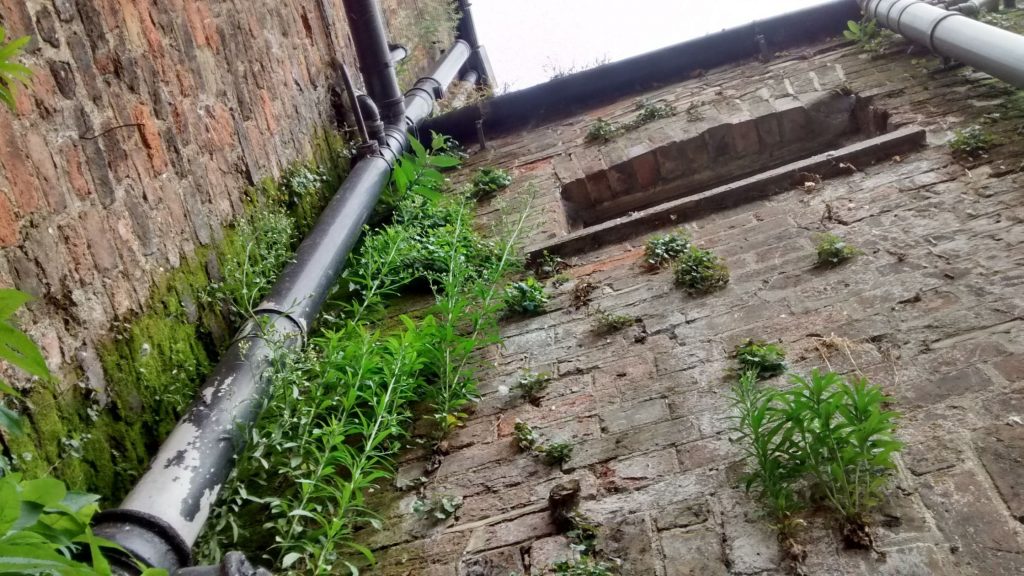
- Drainage Failures: Blocked guttering packed with moss and leaves, alongside cracked downpipes, leads to localised water overflow that pours directly down the external masonry.
- Masonry and Wall Failure: External wall deterioration, such as spalled brickwork, porous mortar lines and deteriorated external rendering, allows rain to soak straight through solid masonry to the internal plaster. Cavity walls will only fail if they become bridged at the base by debris or poorly blown insulation forms a bridge to the inner leaf.
- Aged and Defective Seals: Perished mastic joints or defective seals surrounding window frames and external doors form a prime gap for wind-driven moisture ingress.
- DPC Failures: Ground floor walls become highly vulnerable if there is no damp proof course installed, or if the external ground level has been raised, meaning the existing DPC has become bridged by soil, decking or new paving.
Signs of Water Ingress
Property owners frequently ask: What does water ingress look like? Spotting the warning signs early requires monitoring both the internal living spaces for obvious signs while carrying out regular checks of the exterior of a property.
Signs of water ingress inside the Home
When water penetrates inside a property, it leaves distinct visual and physical footprints inside which indicate a problem which must be addressed:
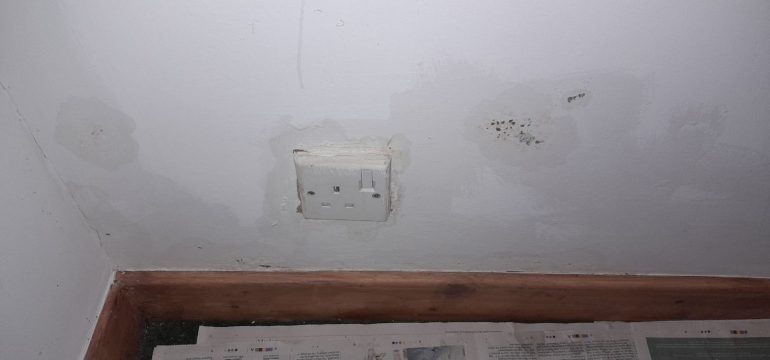
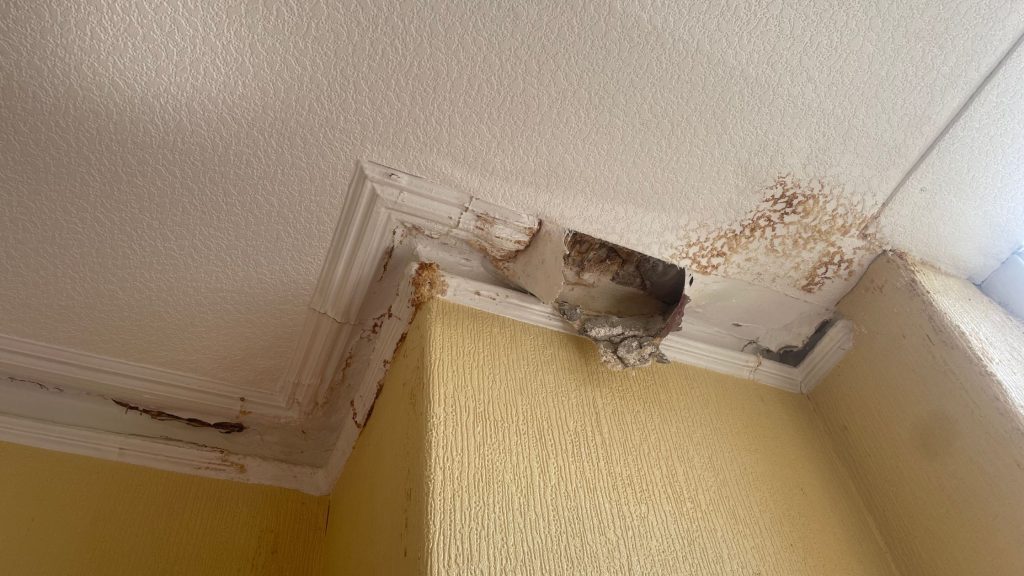
- Localised Damp Patches: Darkening, damp-to-the-touch patches on internal walls or ceilings, which often expand following periods of heavy rain.
- Salty Tidemarks: Damp patches up to a metre high above skirting board level could indicate a rising damp problem, especially when accompanied by salty deposits.
- Decorative Failure: Peeling wallpaper, bubbling paint, and blistering plaster as the trapped moisture breaks down the bond behind wall finishes.
- Rotten timber: When the moisture content of timber is increased, it can lead to fungal decay.
- Atmospheric Telltales: An unmistakable musty, earthy smell that indicates stagnant moisture inside a property.
Signs of water ingress from outside the Home
The outside of your property will often provide signs of the source of moisture that is causing internal dampness. Look out for:
- Visible Efflorescence: White, powdery salt staining blooming on the brick surface, caused by wind-driven rain or groundwater evaporating and leaving minerals behind.
- Vegetation, Moss or Algae Growth: Thick, organic green moss or algae growth on brickwork indicates a problem with moisture. If the building is solid wall construction, this could penetrate inside.
- Masonry Deterioration: Spalling bricks and masonry cracking that is progressively accelerated by winter freeze-thaw cycles, where trapped water freezes, expands, and fractures the stone.
- Leaking gutters: blocked or overflowing gutters will allow moisture to soak into masonry
- Damaged roof coverings: missing or damaged tiles, loose flashings or cracked chimneys may be visible from ground level.
- Backed up drains: Water pooling around drains indicates they are no longer functioning properly.
Is Water Ingress Serious? The Long-Term Risks
Homeowners facing an unaddressed issue often ask: Is water ingress serious?
The definitive answer is yes. Moisture inside a property can cause structural issues that demand accurate diagnosis before lasting damage occurs. For leaks, you should seek advice from a plumber, and for damp problems, assistance can be found in the form of a damp and timber survey from a qualified surveyor
If left untreated, moisture ingress will cause damage to plasterwork and can lead to structural issues such as wall tie failure and timber decay.
When moisture remains in contact with timber, fungal decay can occur, affecting floorboards, joists, wall plates, and laths, which over time can permanently reduce their load-bearing capacity. Damp timber is also attractive to woodboring beetles.
Furthermore, cold and damp walls can lead to mould growth, releasing thousands of airborne spores into the property. This will cause highly unpleasant living conditions and can in some cases aggravate respiratory issues for occupants.
Water Ingress Treatment
When resolving a moisture ingress issue, masking the problem with temporary quick fixes is guaranteed to fail – when used incorrectly these products merely trap the moisture inside the wall, causing the paint to bubble and blow off the surface. You must always address the root cause of the problem.
The only permanent cure is to accurately pinpoint the root cause through a comprehensive Damp and Timber Survey conducted by a qualified professional surveyor.
PCA-qualified surveyors will get to the bottom of the water ingress problem, using specialist diagnostic tools to understand the full picture. They will assess the condition of timber and provide you with all their findings in a survey report.
Correct Physical Remedies
Depending on the surveyor’s findings, treating the issue involves implementing correct physical remedies to make the structure watertight and safely redirect water:
- Clearing Drainage Routes: Unblocking gutters and repairing any loose or cracked downpipes.
- Fixing Building Defects: Repairing deteriorated roof coverings, fixing slipped slates, and replacing defective window seals. Check and clean out blocked sub-floor air bricks.
- Masonry Restoration: Re-pointing eroded mortar lines, repairing deteriorated brickwork, and applying specialised exterior masonry protection cream to stop wind-driven rain from soaking into porous walls.
- DPC Rectification: Injecting a new chemical damp proof course or lowering external soil levels that have bridged the original damp course.
Preventing Water Ingress
Regular maintenance will help identify potential problems before they cause significant damage.
To safeguard your property, carry out these actions before winter or periods of heavy rainfall set in.
- Inspect and Clean Gutters: Clean out your rainwater systems every autumn to ensure they can handle high volumes of winter rain without overflowing.
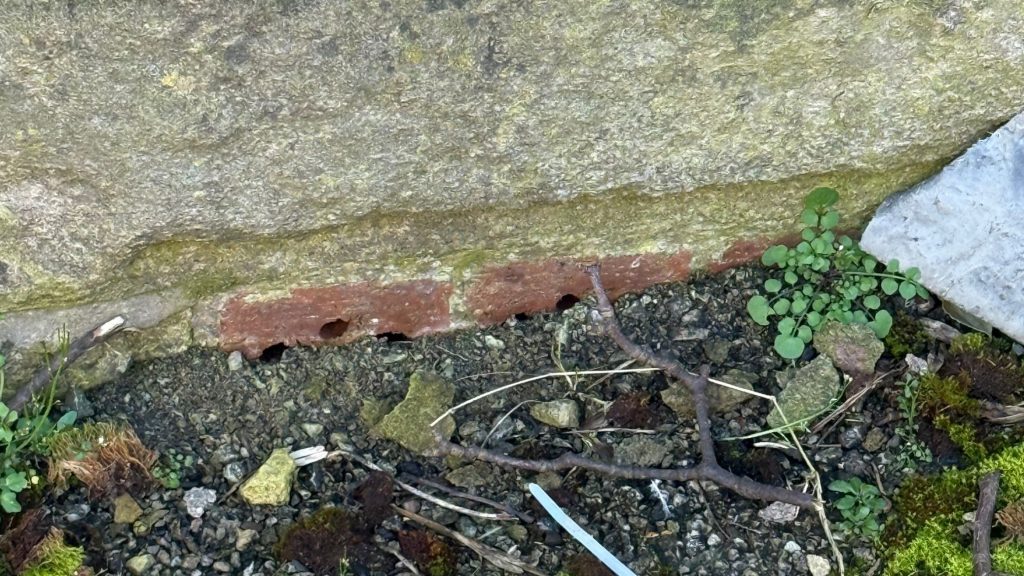
- Clear External Airbricks: Ensure your subfloor air vents are completely free from soil, plant growth, or debris obstructions to maintain necessary airflow.
- Monitor Your Soil Level: Keep garden flowerbeds and soil levels well below the level of your internal damp proof course to avoid DPC bridging.
- Address Mortar Defects: Check your external rendering and brickwork annually, filling minor structural mortar defects before frost can cause spalling
How Wise Property Care Can Help
Preventing moisture ingress affecting Scottish properties is vitally important due to the Scottish climate, especially during winter.
If you are worried about a damp problem affecting your property, we can provide you with an expert damp and timber survey from qualified surveyors to fully identify the problem, and provide you with recommendations on how to return your property to its original condition.
Wise Property Care operates a comprehensive network of local branches across Scotland, ensuring an expert is always nearby.
We are a member of the Property Care Association (PCA), and if any treatments are required, many of our services are backed by our robust 20-year property guarantees, giving you absolute long-term peace of mind that your home remains safe, dry, and secure.
Conclusion
Water ingress is a progressive structural problem that will degrade your property’s value, safety, and comfort if left unmanaged.
By learning to identify the early warning signs, understanding how it differs from plumbing leaks, and calling in professional help to address the root structural cause, you can stop damp, fungal decay, and mould in their tracks.
Take control of your home’s protection today.
Concerned about water ingress? Book a professional survey with Wise Property Care to secure a permanent, guaranteed solution for your property.