Rising Damp
Rising damp is often confused with other forms of damp, such as penetrating damp and condensation. Find out more about how to identify differing types of damp that affect buildings.

For your Local Experts call us on 0808 301 8231 or Book A Survey Online
Damp proof courses are an integral part of a building, and while many properties are designed and built with one, often they can become damaged or deteriorate over time.
Many older buildings may not have a damp proof course, some may have a rudimentary DPC, while others are constructed with airbricks instead.
At Wise Property Care we are experts at dealing with damp problems for properties located in Scotland, and have put together a guide on the importance of damp proof courses, problems associated with them becoming damaged or bridged, and what to do if you are suffering from damp problems.
Damp is one of the most misdiagnosed problems that homeowners face, so professional advice by honest and reputable experts is recommended for long term peace of mind.
Wise Property Care have been building back value into Scottish properties since 1996, and are a member of the Property Care Association, a Which? Trusted Trader and are rated ‘Excellent’ with over 500 independent reviews.
A damp proof course, or DPC for short, is a waterproof barrier built into a wall horizontally, typically along a mortar course around 150mm above the external ground level. It is designed to prevent the upward movement of moisture from the ground into the fabric of the building through a process known as capillary action.
The physical barrier prevents water rising up the masonry, which in turn prevents it damaging internal surfaces. This keeps walls, plasterwork, paint and wallpaper inside dry.
On solid wall construction there will be one barrier and on cavity wall construction there will be one on each leaf.
When a damp proof course is not installed, or if one has become defective or bridged, moisture can rise upwards through the pores inside masonry and mortar, before evaporating from the surface inside the property. This causes unpleasant damp conditions while damaging the surface of the walls.
Typically, modern damp proof courses are built using damp proof membranes, but all manner of materials have been used in the past, including bitumen, slate and engineering bricks.
If there was no barrier built into masonry walls, moisture would be able to rise upwards through capillary action into the building. This is known as rising damp and is the reason damp proof courses are required as part of building regulations.
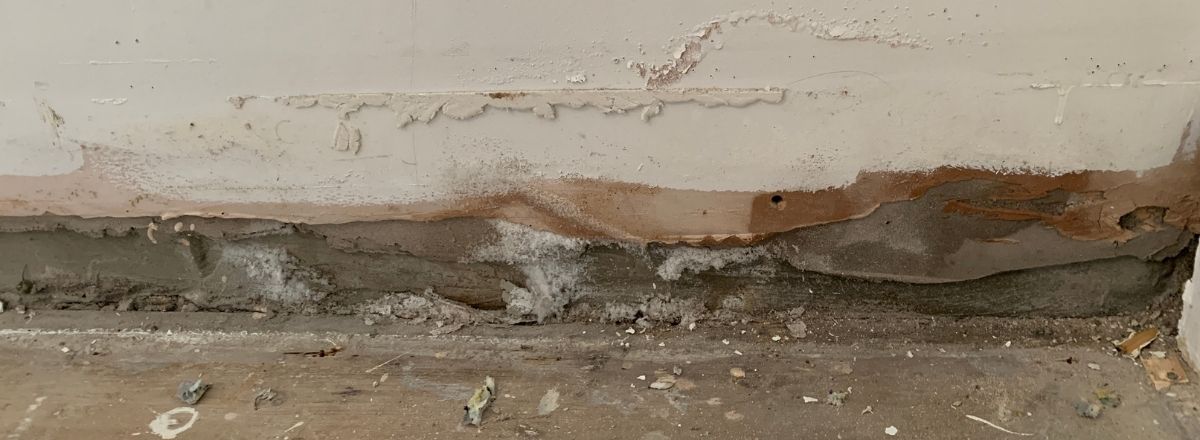
Without a barrier, moisture from the ground would rise upwards through the masonry walls bringing with it hygroscopic salts. Chlorides and nitrates are often diluted in ground water, and when they rise upwards through capillary action, they reach the surface of the wall, up to a metre high. It is at this point that the moisture evaporates, leaving behind the crystalised salts on the wall.
This can lead to the deterioration of plasterwork internally, and salt bands appearing both internally and externally. When masonry is damp, it can cause timber in contact with it to become damp, which in turn can lead to fungal decay problems such as wet rot and dry rot.
Because of this, all buildings are required to have a damp proof course in order to maintain an internal environment free from damp and the associated problems damp causes.
Some buildings may never suffer from rising damp, while others are more susceptible due to the below ground water table, and the building materials used to construct the property.
Granite properties such as those found in Aberdeen are a good example, as the water cannot rise through granite, but it will rise through the mortar over time.
Regardless, all modern constructed buildings are required to have a damp proof course.
While occupants of properties across Scotland have been aware of rising damp since Roman times, there have been various attempts to prevent moisture rising up through the walls of buildings.
More often than not a damp proof course is installed during the building process. If a property suffers from rising damp because the existing DPC has failed or if it was never installed with one, remedial damp proofing may be required.
Most properties, especially modern properties built since the 1920’s will have a physical damp proof course. This is a thin layer of material that is placed in a mortar course on top of the brickwork around 150mm above ground level. For most properties in Scotland these will be made of either slate, lead, bitumen or a plastic membrane.
Since their invention in the 20th century, thousands of properties have been protected from rising damp using chemical damp proof injections.
This has allowed properties that suffered from rising damp to create a waterproof chemical barrier, without the need to remove mortar or brickwork to insert a physical material barrier.
Silicone cream is injected into pre drilled holes in the mortar course at regular intervals.
The cream diffuses into the masonry, lining pores within, to prevent water rising and creating a permanent barrier.
Internal replastering may be required, if it has been contaminated with hygroscopic salts carried upwards with ground water. Salt resistant plaster stops further salts from migrating to the surface, protecting the inside of the property and allowing for redecoration once dried.
Compared to traditional methods, damp proof injections provide a less disruptive and cost effective way to prevent rising damp.
You will only need a remedial damp proof injection when your property has a confirmed rising damp problem. Often rising damp is misdiagnosed for other types of damp, or damp problems can appear when an existing and perfectly fine damp proof course becomes bridged - meaning moisture can bypass it.
This is why accurate diagnosis of the damp problem is key before carrying out any damp proofing. Many properties will not require remedial damp proof injections - and a reputable and qualified surveyor will make this clear after an inspection of a property.
You only need a remedial damp proof course installed if a rising damp problem is confirmed.
The first step is to see if there are any signs of a physical damp proof course. Check the exterior of your property at around 150mm (3 bricks) above ground level for signs of a layer of slate, membrane or engineering bricks or a thicker mortar course that is hiding a DPC.
If there is no evidence of a damp proof course, and you have symptoms of rising damp inside, you may require remedial damp proofing.
Rising damp has a number of tell tale signs to look out for, including:
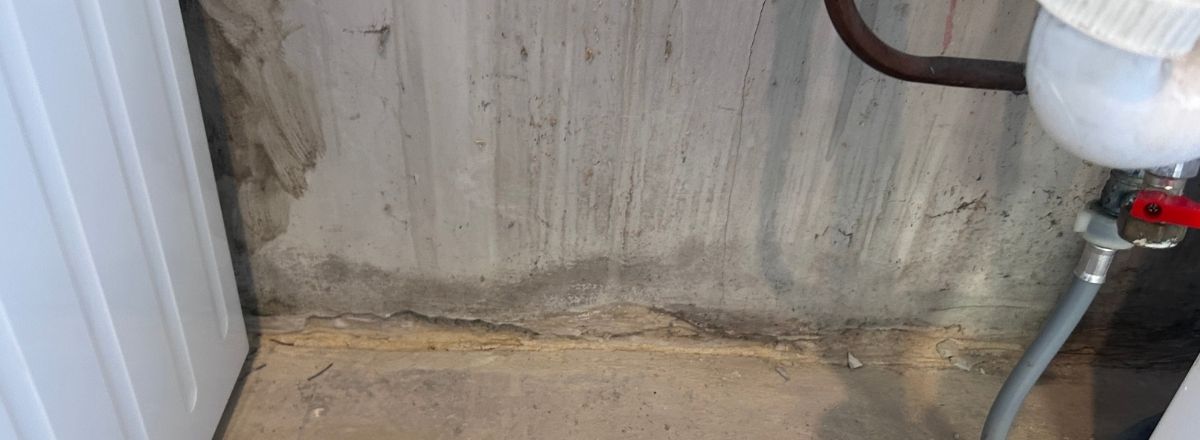
Salt bands on internal and external walls - White or dark crystalised deposits on walls just above skirting board level. Outside you may also see a similar tidemark band of salt.
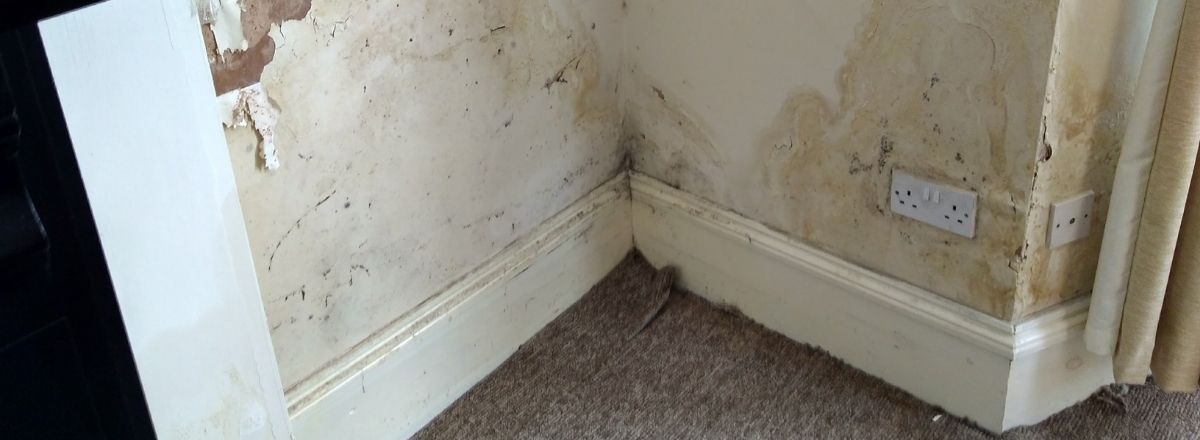
Damp patches - Damp patches can appear as a tidemark across a room, up to a metre high. Again, these may be visible externally. The masonry within the wall will be damp with ground water that has risen upwards.
Cracked and rotting skirting boards - As the moisture content of timber in contact with the damp masonry increases, it can cause issues such as fungal decay. Wet rot and dry rot can damage skirting boards and joists.
Peeling wallpaper and deteriorating paintwork - Damp and salt patches can cause wallpaper to peel away from the wall, while paintwork will chip off as the plasterwork behind deteriorates.
Professional assistance can help identify a rising damp problem, and provide recommendations for next steps. Sometimes damp proof courses can become bridged, allowing moisture to bypass the waterproof barrier.
If moisture can bypass a damp proof course, it is able to continue rising upwards, and the symptoms of rising damp may appear internally. Damp courses are not always obvious and homeowners can miss them when undertaking external work.
This is very common in older properties where decking, extensions, new patios or raised footpaths are erected externally. In some cases garden borders or debris piled up against walls can also cause a damp proof course to be bridged.
If a functioning damp proof course is bridged, all that is required is to clear the obstruction causing the problem. In reality this may not always be possible, as owners may not want to remove newly installed pathways or patios or lower ground levels.
Internally a damp proof course can be bridged where plasterwork is brought down to floor level. Plaster should never be brought all the way down to the floor, there should be a gap which is then covered by the skirting board.
This may require plaster to be hacked off, especially if it has become contaminated with hygroscopic salts.
If you require professional assistance, Wise Property Care have a number of qualified surveyors who can survey your property in order to identify the root cause of the damp problem and provide you with recommendations to solve the issue long term.
A bridged damp proof course can be caused when plasterwork is in contact with a damp solid floor.
After a rising damp problem has been confirmed, damp proof injections can be used to create a waterproof barrier to prevent further moisture rising up the wall. Where plasterwork has been contaminated with ground salts, this will need to be hacked off and replaced.
Wise Property Care technicians will take efforts to minimise dust and disruption during the damp proof injection installation. They will use floor coverings, dust sheets and vacuums in order to keep your property tidy.
They will use Hilti dust extraction units when hacking off contaminated plasterwork, drilling and cutting timber. This can help remove airborne particles from the atmosphere while they are working.
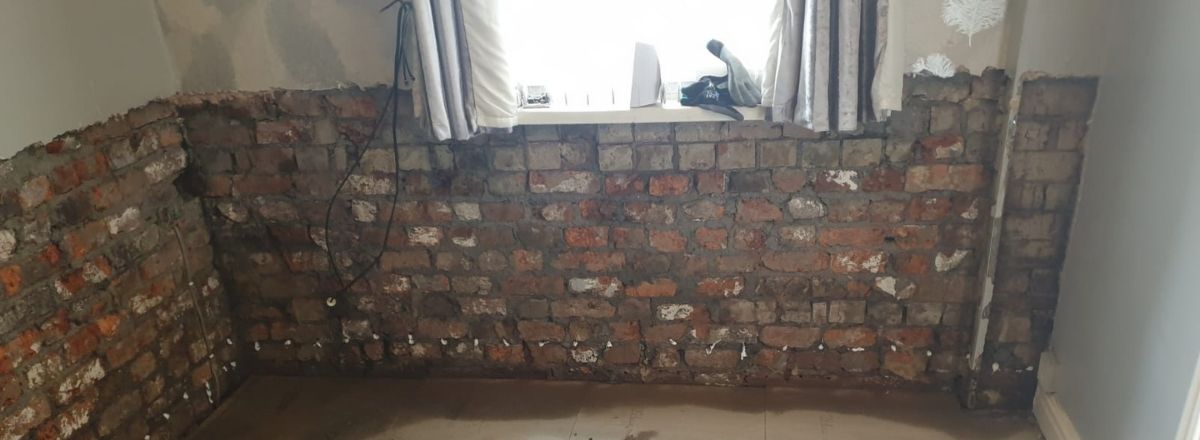
The area will need to be cleared for access while any radiators or skirting boards will need to be removed. The technician will then hack off plaster in order to expose the affected masonry within the wall.
The technician will drill holes externally and/or internally every 120mm along the wall, around 150mm above the ground level. Silane‑based damp proofing cream is inserted into the holes and this creates an impermeable barrier preventing moisture rising upwards. This forms the new DPC.
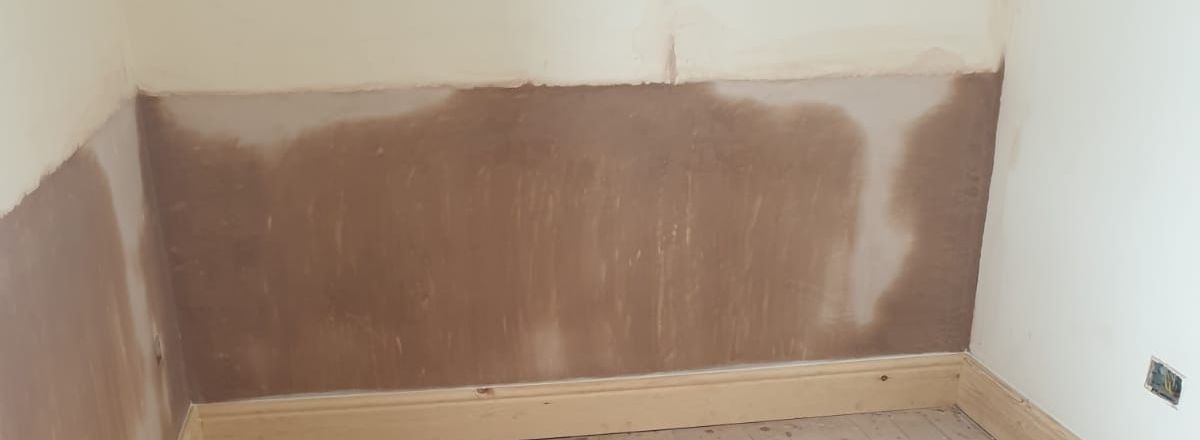
They will then replaster the walls using breathable plaster that allows residual moisture trapped within the masonry walls to escape. This supports the ongoing drying process.
Because the masonry walls are contaminated with ground salts which can continue to migrate through the walls, even after a DPC has been installed, salt resistant plaster is used. This will prevent any salts remaining in the wall migrating through and damaging the new plasterwork. Final decorative finishes can then be added to restore the wall’s appearance.
We stand firmly behind the quality of our property repair treatments, which are designed to stand the test of time.
Our damp proof injection treatments for rising damp typically come with a 20 year guarantee. For over two decades we have been offering long term guarantees, giving our clients the peace of mind their property is protected long term.
Yes, damp proof injections are an effective way at preventing rising damp - when rising damp is the root cause of the moisture affecting walls.
They will not work if the root cause of the damp problem is caused by condensation or penetrating damp, or if a DPC becomes bridged and moisture is able to bypass the waterproof barrier. This is why accurate and professional assessment is key in order to provide long term solutions.
The damp proof injection cream contains liquid silane and siloxane components that create a waterproof barrier as they diffuse in the wall, preventing moisture rising upwards. These are pore lining not pore blocking products, so moisture can continue to evaporate from the wall.
The products we use are effective long term, hence why we typically back our rising damp treatments with a 20 year guarantee.
Replastering is required after a damp proof course has been installed, to prevent the hygroscopic salts trapped within the wall, brought up by ground water, from continuing to contaminate the plasterwork. If the plaster is not replaced using a salt resistant additive, salts will continue to migrate to the surface and draw moisture from the atmosphere. This will cause damp patches to appear and salt to crystalise on the surface. This gives the appearance that the DPC installation has failed.
A correctly installed damp proof course can last for decades, or even longer, depending on the products used and the quality of installation. Wise Property Care will typically guarantee our damp proofing work for 20 years, giving you peace of mind your property has long term protection.
Damp proof injections are only worth it if a property has no working damp proof course, and the property is suffering from a confirmed rising damp issue.
Rising damp can be confirmed by undertaking a full external and internal survey, while cross referencing with tell tale signs such as salty tide marks up to a metre high above skirting board level. If required, internal masonry moisture readings can also be taken.
Unlike condensation where the plaster will be damp, rising damp will cause the masonry within the wall to be saturated with moisture. This is why a remedial damp proof course is required, in order to create a waterproof barrier.
When you’re worried about a rising damp problem, you want to use a company with experienced and specialist surveyors across Scotland - with the right training and knowledge to reach the proper diagnosis.
Wise Property Care have both CSRT (Certificated Surveyor in Remedial Treatments) and CSTDB (Certificated Surveyor of Timber and Dampness in Buildings) qualified surveyors operating from a network of local branches - meaning no matter where you are in Scotland, we have a surveyor local to you.
Wise Property Care have both CSRT (Certificated Surveyor in Remedial Treatments) and CSTDB (Certificated Surveyor of Timber and Dampness in Buildings) qualified surveyors operating from a network of local branches - meaning no matter where you are in Scotland, we have a surveyor local to you.
Wise Property Care have been fixing condensation and mould problems and building value back into Scottish properties since 1996.
We are proud members of the Property Care Association (PCA), the trade association that governs our industry. This means you can trust you’re getting professional and honest advice, and treatments following the industry best practice.
Wise Property Care are endorsed by Which? Trusted Trader - meaning our customer service and workmanship has passed rigorous trading standards assessments.
We are rated ‘Excellent’ on Trustpilot with over 550 independent customer reviews from across our branches in Scotland.