
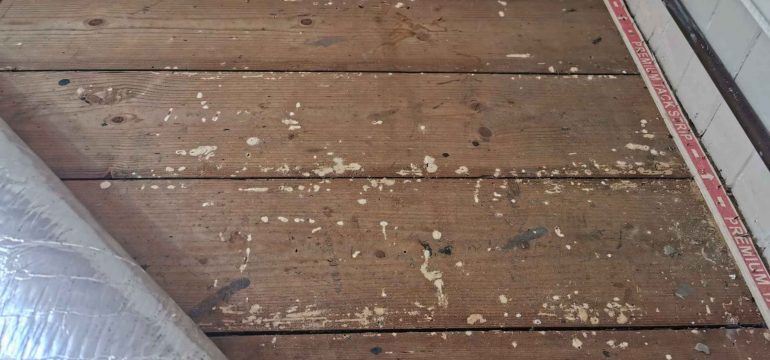

You’ve spotted woodworm holes in your floorboards, roof timbers, or furniture. But does this mean that your property has an active woodworm infestation, or is this just evidence of a problem that was dealt with years ago?
Woodworm evidence within timber doesn’t always mean you have an active infestation. Exit holes and surface damage can remain visible long after wood-boring beetles have died out. The challenge lies in distinguishing historic activity from an ongoing problem.
Woodworm happens when the larvae of wood-boring beetles eat their way through timber over the course of three to five years, before emerging as adults. By the time signs are visible on the surface, damage has already been done.
In this guide, we explain how to identify the signs of an active woodworm infestation and when to seek professional help.
Signs of an Active Woodworm Infestation
Figuring out if a woodworm infestation is active often involves checking for a combination of signs, rather than just one. These signs include:
1. Fresh frass (fine wood dust)
Frass is the fine, powdery dust produced by the woodworm larvae as they digest wood.
It collects around exit holes and on surfaces below affected timber, as the movement of larvae or adults cause it to fall out of flight holes.
If you aren’t sure if the frass is old or new, clear away any debris and place a sheet of card or paper below the affected area. Monitor over the course of a week. New frass appearing means the infestation is probably still active.
2. New clean exit holes in timber
Spotting exit holes in timber doesn’t necessarily mean you have an active infestation as these remain visible long after woodworm has died out.
New holes appearing that have clean, sharp edges tend to be fresh. Older holes look darker and worn, and may have cobwebs.
Map out any existing holes by marking these with a coloured pen or piece of tape, or take photos to check against on a regular basis. New holes appearing is a strong indicator of a current woodworm problem.
3. Adult beetles in your home
Any beetle sightings in your home should be taken seriously. Beetles tend to emerge from wood between April and September (known as “the flight season”). If you are checking timber outside of the flight season and see no obvious signs, this doesn’t necessarily mean the infestation is over.
While beetle larvae take years to mature and work their way through timber, adult wood-boring beetles don’t live long once they emerge, so look out for beetles that are dead or alive. They are drawn to light so are most commonly found on window sills.
Some types of beetles can even be heard. The Deathwatch beetle makes a distinctive tapping sound to attract a mate, though it is rarely found in Scotland.
4. Weak or crumbling timber
If timber feels soft, spongy, or crumbles when pressed, or if floorboards feel springy, the structural integrity of timber may have been compromised by woodworm damage.
This is worth taking seriously whether the infestation is active or historic as weakened timber needs professional attention regardless of when the damage happened. By the time timber is visibly affected, years of larval tunnelling has likely caused significant internal damage.
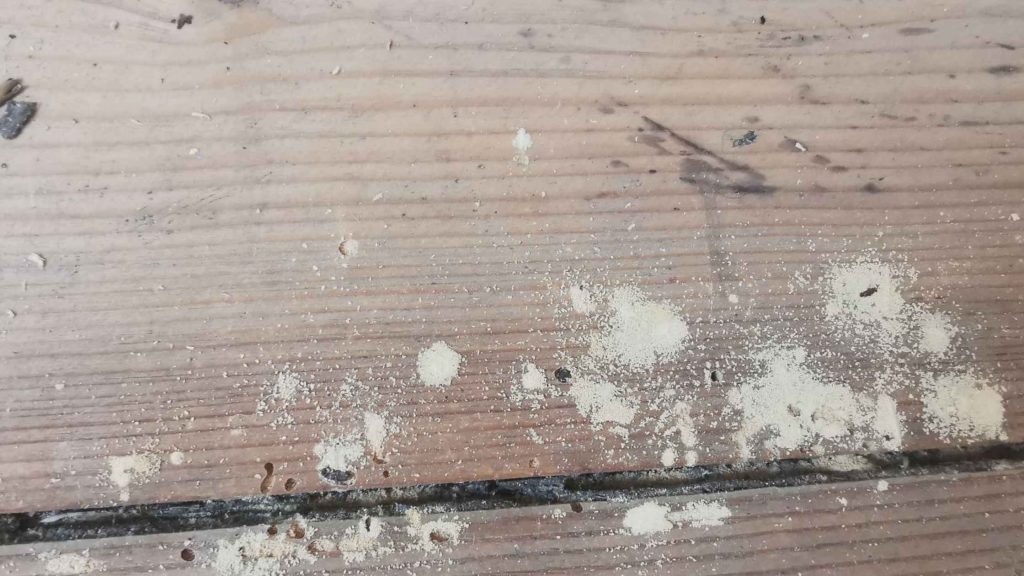
Frass, evidence of emergence holes and damaged timber can often indicate a woodworm infestation.
Quick Reference Guide for Signs of Active Woodworm
| Woodworm Sign | What It Means | ||
| Fresh pale frass around holes | Likely active woodworm | ||
| Frass reappearing after cleaning | Strong indicator of current woodworm activity | ||
| Clean sharp-edged exit holes | Recently emerged beetles | ||
| New holes appearing | Current woodworm emergence | ||
| Tapping within timber | Possible Deathwatch beetle infestation | ||
| Dead or live beetles near timber | Active flight season | ||
| Soft or crumbling timber | Structural damage: seek professional assessment |
What to Do if You Suspect an Active Woodworm Infestation
If you’re not sure if an infestation is active from the signs alone, the best way to be sure is to seek professional guidance.
A professional damp and timber survey will confirm if an infestation is current, identify the species involved, assess moisture levels and timber condition, and provide a clear report with honest recommendations. Wise Property Care’s surveyors will only ever recommend treatment where it is genuinely required.
An inactive infestation isn’t necessarily the end of the story. Woodworm thrives in damp, poorly ventilated and untreated timber, and if those conditions remain, the risk of a future outbreak does too.
Whether you have spotted signs of woodworm yourself, had it flagged on a homebuyer’s report, or simply want peace of mind, booking a survey is the right first step. Our surveyors operate across Scotland and are ready to help. Book a damp and timber survey with Wise Property Care today.
Frequently Asked Questions on Active Woodworm Infestations
Do I need to treat woodworm if it’s not active?
If a professional survey confirms a woodworm infestation is historic, then treatment may not be needed. A professional surveyor can check if timber has been structurally weakened by a past infestation, and check if the conditions that allowed the woodworm to thrive have been resolved. A survey report can help homeowners make an informed decision on if woodworm treatment is needed.
What time of year do woodworms come out?
Adult woodworm beetles emerge from timber between April and September, which is known as the flight season. This is the time of year when infestations are most visible as beetles leave behind fresh exit holes and frass (powdery dust left around new holes). However, larvae remain active within timbers outside of this season as they bore their way through wood for three to five years.
How long does a woodworm infestation last?
A woodworm infestation typically lasts three to five years, depending on the availability of suitable wood and species of wood-boring beetle causing the damage. The larval stage causes the most damage as the hidden larvae tunnel through wood, emerging as adult beetles up to five years after eggs have been laid.
However, if an infestation isn’t treated and underlying conditions tackled, there is a strong chance the infestation will continue as the adult beetles lay eggs in existing holes and cracks in timber, ready to start the cycle over again.
Can you ever get rid of woodworm?
Woodworm can be effectively treated and controlled when an active infestation is correctly identified. Professional treatment can target larvae and prevent further infestation. A professional survey is a reliable way to tackle woodworm, while assessing the safety of any damaged timber.