
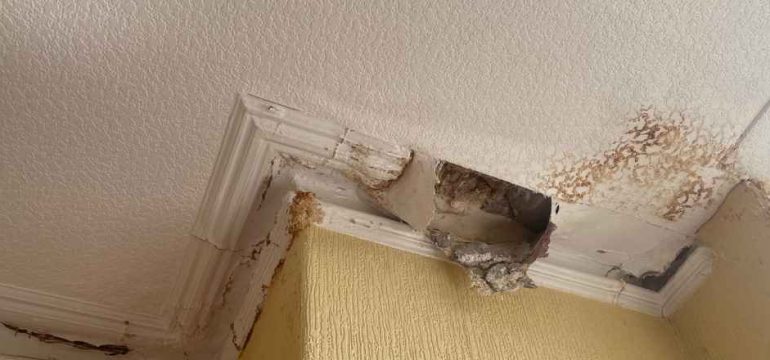

For homeowners and landlords across Scotland, the sight of a darkening patch on a ceiling is a universal cause for concern. Whether you are living in a historic sandstone tenement in Glasgow, a rural cottage in the Borders, or a post-war construction home in Aberdeen, the Scottish climate provides a rigorous test for any property’s defences.
Between the relentless horizontal rain of the west coast and the biting North Sea winds, moisture has a way of finding even the smallest structural weakness. When a damp patch suddenly appears, the questions are immediate: What is it? Is it serious? And how can I fix it permanently? At Wise Property Care, we understand that you need authoritative, empathetic, and professional advice to protect your building’s value.
Identifying the Root Cause: What Kind of Damp is on Your Ceiling?
Not all damp patches or moisture spots on a ceiling are caused by the same issue. Identifying the root cause is the first step toward a permanent solution, as treatment for a plumbing leak is vastly different from the remedial work required for structural penetrating damp.
1. Penetrating Damp (External Water Ingress)
In Scotland, penetrating damp is frequently the result of roof defects or porous masonry, intensified by our volatile weather.
- Slipped Slates or Tiles: Common after severe Scottish storms, a single displaced slate can allow significant water ingress.
- Blocked Gutters and Downpipes: When gutters are choked with debris, water can overflow and saturate the external masonry, eventually soaking through to the ceiling.
- External Masonry Defects: Cracked render or porous sandstone allows horizontal rain to slowly penetrate the building fabric, where it can appear as damp patches high up on a wall or can soak across a ceiling.
Visual Cue: If your ceiling damp looks like a “tide mark” with distinct brownish edges, it is almost certainly an external leak or penetrating damp.
2. Condensation and Cold Bridging
Condensation spots on the ceiling are often a result of modern lifestyles clashing with traditional building styles.
- Cold Bridging: In older tenements, certain areas of the ceiling (particularly where internal walls meet the roof) may be significantly colder than the rest of the room. This “cold bridge” attracts moisture from the air, and condensation forms. Quite often, the cold bridge will be marked out in mould.
- Poor Ventilation: Modern timber-frame builds are built vapour-tight and rely upon the correct use of ventilation to remove excess moisture. When this does not happen, the moisture from cooking, bathing, and breathing cannot escape, settling on the cold ceiling as damp patches and causing mould to grow.
3. Plumbing Leaks
Hidden pipework and bathroom seal failures are the most common “internal” causes of wet patches on the ceiling. These often appear suddenly and may even cause water to leak from the ceiling during heavy use of upstairs facilities.
Generally speaking, plastic water tanks in the loft do not leak, but galvanised water tanks can spring a slow leak if rust eats through the metal. The seals on the drain of modern level access shower trays can be particularly problematic, due to the very tight access under the floor, when they are installed.
Why Scottish Properties are Unique
Scotland’s architectural heritage brings specific challenges to moisture management. From the sandstone tenements of Edinburgh and Glasgow to the traditional four-in-a-block flats, local building styles react differently to the environment.
Tenement Housing
Sandstone is a naturally porous material. In Glasgow and Edinburgh, decades of exposure to high humidity and rain can lead to penetrating dampness, where moisture travels vertically through the porous stone. Furthermore, communal roof repairs in tenements often mean that a damp patch in one flat is the result of a defect several floors up or in a shared guttering system. Defective sandstone also provides the perfect gentle damp for dry rot to grow up the internal lath plaster cavity.
West Coast Rain and North Sea Wind
The geographic location of your property matters. If you are close to the coast or on an exposed hillside, you may be more susceptible to wind-driven rain, which is a key cause of penetrating damp and can drive water through tiles. If there is no or defective sarking felt, this water will soak through to the ceiling.
On the West Coast, high volumes of rainfall can cause leaks to occur, especially when rainwater goods or roof coverings become overwhelmed or are defective. If gutters become blocked, this can cause moisture to penetrate inside a building, leading to damp stains on walls and ceilings. Externally, this may be noticeable with algae or moss growth in the affected areas.
Conversely, on the East Coast (which receives less regular rainfall), when it does rain, the wind can drive moisture through even the smallest cracks in mortar or tiles.
One issue that does confuse, is snow melt. When deep snow starts to melt in a north-facing steep valley, it can come through the tiles at almost any height and drip onto the ceiling below. Without sarking in place, these issues will be intensified.
Is Damp on the Ceiling Dangerous?
Ignoring a damp ceiling can lead to further damage, more costly repairs, and ultimately create an unpleasant living environment that can be harmful to occupants’ health.
Health Risks: Mould on Ceilings
Damp environments are the primary breeding ground for mould. These spores can trigger respiratory issues and are a significant concern for those with pre-existing conditions like asthma. Mould on ceilings is often caused by a disparity in temperature between the cold roof space above and the warm, humid air inside the home. This causes humid air to condense, creating the conditions for condensation and mould to form. It is therefore important for adequate air circulation and ventilation to be in place.
Structural Risks: Rot in Timber and Ceiling Joists
Persistent moisture on a ceiling can lead to wet rot or dry rot in the hidden ceiling joists. Once rot takes hold in the structural timber, the cost of repair escalates significantly as the safety of the floor above may be compromised.
The “Repairing Standard” for Scottish Landlords
For private landlords in Scotland, dampness is a legal matter. Under the Repairing Standard, landlords have a statutory duty to ensure that a property is wind and watertight and fit for human habitation. Failure to address damp patches can lead to disputes with the Housing and Property Chamber.
Professional Solutions for Damp on Ceilings
Many people ask, “how do I stop damp on the ceiling?” and turn to DIY solutions like stain-blocking or “damp paint.” While these may appear to be cost-effective, they often cause more problems than they solve in the long run, as the damp problem is often misdiagnosed or becomes trapped inside the fabric of the building.
Why Quick Fixes Fail
Stain-blocking paints are a temporary mask, not a cure. If you paint over a damp patch without fixing the slipped slate or the blocked gutter, the moisture will continue to saturate the structural materials behind the paint. Eventually, the damp will reappear, often worse than before and with the added risk of fungal decay.
The Value of a PCA-Qualified Survey
The only way to achieve a permanent solution is through an accurate diagnosis. At Wise Property Care, our surveyors are CSRT (Certificated Surveyor in Remedial Treatments) and CSTDB (Certificated Surveyor of Timber and Dampness in Buildings) qualified. We provide honest, professional advice following industry best practices.
How Wise Property Care Can Help
Wise Property Care has a proven track record across Scotland, from Inverness to the Borders, delivering preservation solutions that build value.
- Local Expertise: Our network of local branches ensures that no matter where you are, you have a surveyor close to you who understands the local building styles and weather challenges.
- Industry Recognition: We are proud members of the Property Care Association (PCA) and TrustMark, ensuring full compliance with health and safety standards.
- Long-Term Guarantees: Our treatments are backed by 10-20 year guarantees, providing you with peace of mind that the solution is permanent.
Take the Next Step: Book a Professional Survey
Whether your ceiling damp is a sudden wet patch after a storm or a persistent moisture spot that refuses to dry, don’t wait for the damage to spread.
Worried about a damp ceiling? Book a professional survey with Wise Property Care today. Our qualified surveyors will provide the definitive Scottish solution you need to protect your home for the long term.