
For your Local Experts call us on 0808 301 8231 or Book A Survey Online
Scottish Woodworm Specialists
Woodworm infestations can cause serious structural damage to timber structures in properties if left untreated. There are several different species of woodworm that affect buildings in Scotland, so correct identification is key before starting any treatment.
Wise Property Care is Scotland's trusted property preservation specialists for timber treatments, including woodworm treatments.
As proud members of the Property Care Association (PCA), we operate from local branches across Scotland, providing rapid and reliable assistance across Edinburgh, Glasgow and the Central Belt, to the borders and the Highlands.
No matter where you are, we are able to assist you with any issues you may have relating to woodworm, safeguarding your property from further damage.
From expert timber surveys and woodworm identification to professional woodworm treatment backed by long-term guarantees, we offer complete peace of mind.
How serious is a Woodworm Infestation?
Woodworm can range from minor aesthetic damage which requires small DIY treatments, to serious structural damage to timber in a property. If left untreated for a period of time the tunnelling by the larvae can remove stability and could even eventually lead to collapse.
Wise Property Care has attended numerous properties across Scotland that have had severe damage caused by woodworm that required timber repairs. However it is far more common that woodworm sprays are carried out with limited timber repairs.
If you are unsure about the extent of woodworm damage, it is recommended that you seek professional advice in order to assess the condition of timber, and the full extent of the infestation.
What Does Woodworm Look Like?
Woodworm larvae are a cream-white colour and can be hard to spot, as they live within wood until they are fully grown. The adult beetle will create a flight hole and emerge from the timber, usually between April to September. The size of a beetle depends on the quality of the wood consumed, but they can easily be seen with the naked eye.
A Common furniture beetle is chocolate brown, has wings hidden under protective wing cases and is around three to five millimetres in size.
Most woodboring beetles are found naturally in the environment. This means Common furniture beetles are commonly found in old stumps in hedgerows. They are able to crawl or fly into a property, but are mostly introduced into the home on infested items. Particularly when moving house, these items can be stored in the loft and hence the roof timbers can become infested.
Common Types of Woodworm in Scotland
In Scotland the most common type of woodworm species is the Common furniture beetle, however other species of woodboring beetles can be found.
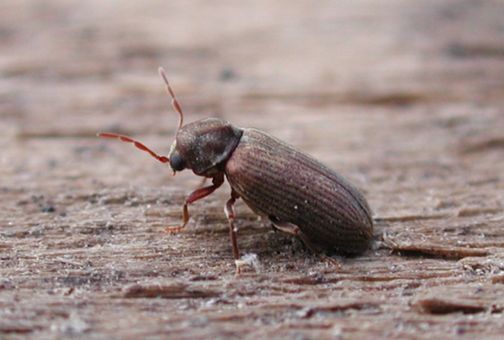
Common furniture beetle
The Common furniture beetle (Anobium punctatum) is the most prevalent woodworm beetle in Scotland, affecting both softwoods and hardwoods. They account for over 80% of all wood boring beetle damage in Scotland, with a life cycle of three to five years, and a two millimetre diameter flight hole.
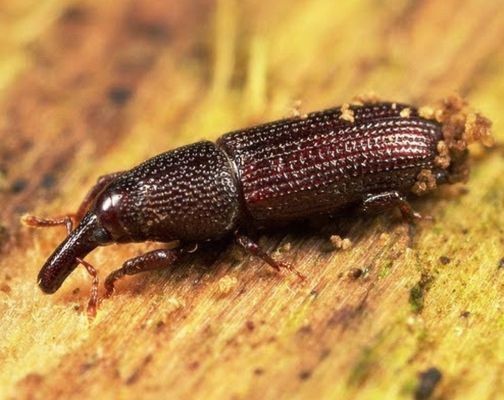
Woodboring Weevil
The Woodboring Weevil (Pentarthrum huttoni) is widespread and requires decayed timber to breed. The adult weevil is three to five millimetres long, and is identifiable by its rostrum ‘snout’. It has a one year life cycle and flight holes are one millimetre in diameter, and ragged. The infestation will die out once timber dries, meaning it does not require insecticide treatments, but the source of moisture removing.
Both the adult beetle and the larvae eat wood, which is unique in the species normally found in buildings in Scotland.
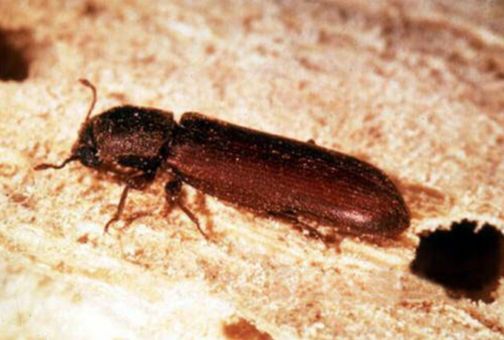
Powderpost Beetle
The Powderpost Beetle (Lyctus brunneus) attacks the sapwood of the wide pored hardwoods such as oak. They have a life cycle of one year and have a two millimeter diameter flight hole. It can often be found in imported wood products such as laminate floors and ‘green’ oak.
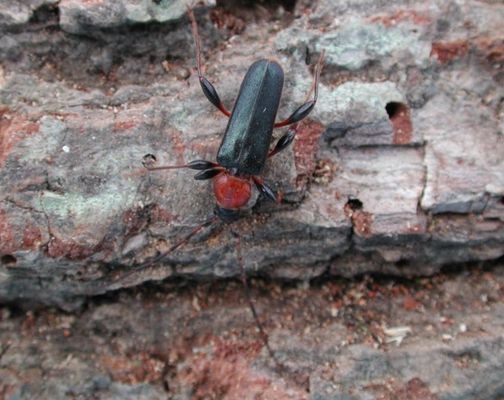
Forest Longhorn beetle
The Forest Longhorn beetle causes damage to both softwoods and hardwoods, but mostly under the bark and within the sapwood. There are many different species in Scotland, many brightly coloured, quite large and with long antenna (long horns). Their lifecycle varies but is often around two to six years, and they produce a large elliptical flight hole. It is sometimes seen emerging from dimensioned timber, but is more likely spotted around logs brought inside for the winter, but not used. This is very often Oak Longhorn (Phymatodes testaceus).
Is the Deathwatch Beetle found in Scotland?
The Deathwatch beetle (Xestobium rufovillosum) is found in England as far north as Cumbria and the North East, but there are few reports in Scotland. It is typically found in older properties, affecting hardwoods, particularly oak. It is often identified by its clicking or tapping sounds, making it possible to confuse with other insects such as booklice.
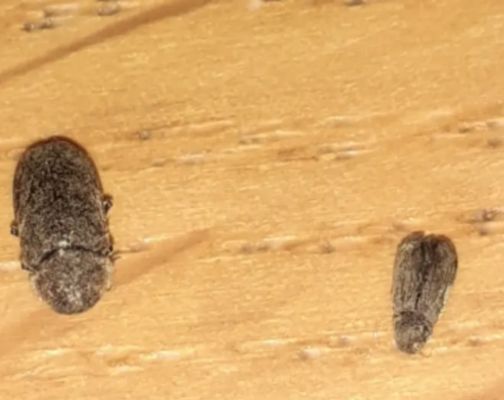
A Deathwatch Beetle Compared with a Common furniture Beetle
A Deathwatch Beetle (left) in comparison with a Common furniture beetle (right) indicating the size difference between the two woodboring beetles.
What are the common signs of active Woodworm infestation?
For many Scottish property owners it may be difficult to spot an active infestation, as the larvae remain hidden inside wood. That said, there are some telltale signs of an active woodworm infestation which can be used to prevent these pests causing structural damage and aesthetic harm to your property.
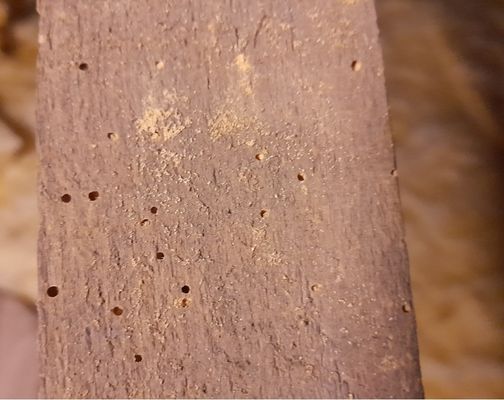
Exit Holes:
Small, round holes in the timber surface where adult beetles have emerged after completing a full life cycle. These however are not always a sign of an active infestation. If you notice new exit holes appearing that are clean, rather than dusty, this could indicate that the infestation is active.
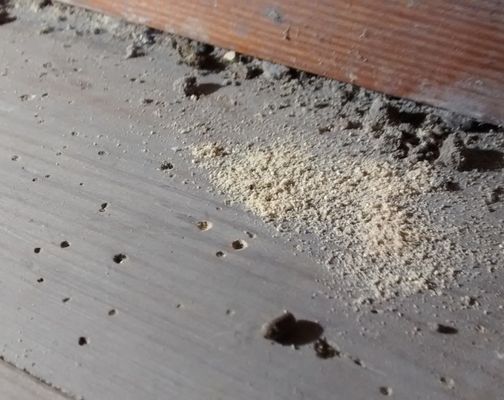
Frass:
Frass is the term used for the fine, powdery dust found near woodworm exit holes. It is the dry larval woodworm droppings produced as they digest wood before emerging. Frass is a key sign of an active infestation.
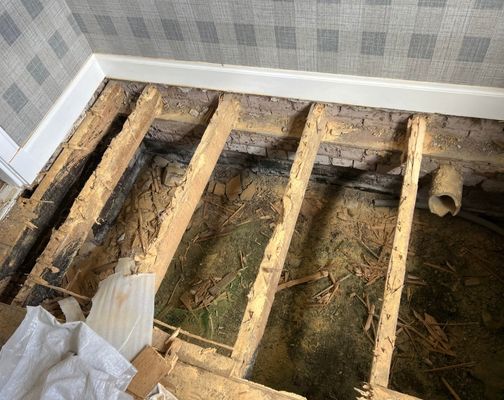
Weak and Damaged Timber:
Crumbling or weakened timber may be an indicator of a woodworm infestation, particularly in areas with other signs of an active infestation. Make sure you do not confuse timber damage with wet rot or dry rot, as these require different treatment methods.
Dead or Live Beetles, or Live Larvae:
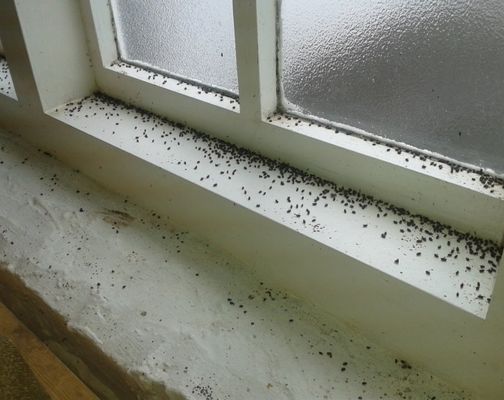
In active infestations, live larvae may be visible within the timber if you break it open. You may also spot live or dead beetles that have emerged from wood, especially on window sills as they instinctively head for the light.
Tunnels:
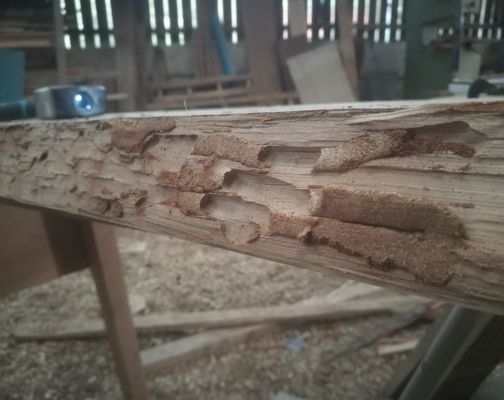
These can be seen on severely damaged timber, or if you cut through the timber, exposing the larval tunnelling.
If you notice any of the above signs it could mean you have an active woodworm infestation and require a damp and timber survey from a professional surveyor to confirm.
Woodworm Survey Scotland
If you have spotted the telltale signs of a woodworm infestation and are worried about how to proceed, you can book a damp and timber survey from a trained professional to confirm activity, and the type of species involved.
When our trained and qualified surveyor arrives at your property, they will:
- Carry out a thorough inspection to understand the extent of the woodworm issue, and the species of woodworm involved.
- Confirm if the infestation is active, and if it actually requires treatment.
- Check timber for any damage and confirm if repairs are required, and if any insecticidal treatments are required for the remaining infected areas.
- Check for associated problems such as wet rot, dry rot or damp and if any other timbers need replacing.
You will then be provided with a detailed report outlining the findings and recommendations for treatments made by the surveyor, if any are necessary. Wise Property Care has a number of PCA qualified surveyors operating across Scotland from our network of local branches.
How to treat Woodworm
Woodworm treatments are only ever required when there has been a confirmed active infestation, and the treatment process will depend on the type of woodworm species found, and the extent of the damage. This is why it is so important to have a damp and timber survey from a trained and qualified timber surveyor to confirm activity. The treatment process involved will depend on the size, location and extent of issues.
In many cases, areas requiring treatment are obscured by an accumulation of dust and old building debris, this must all be cleaned before treatment. Roof insulation will also need to be lifted to gain access to the timbers, and water tanks need to be covered. This will give a clean area ready for insecticide to be applied.
Timber that is structurally damaged or weakened is removed and replaced. For large timbers where there has been extensive infestations over a long period of time, resin repair techniques may be required. All timber repairs will be detailed in the survey report.
The technician will then apply water based insecticidal products that are either sprayed or applied by brush onto bare wood surfaces, eliminating woodboring insects on contact or are ingested by the larvae. This breaks the life cycle and removes the infestation over a number of years.
Typically a woodworm treatment carried out by Wise Property Care is backed by a 20 year guarantee - providing you with a long term solution.
While isolated infestations of woodworm may be treatable with DIY sprays, it's important to seek professional help if the outbreak is severe and if there is damage to structural timbers.
What causes Woodworm?
There are various reasons why woodworm affects certain types of wood, typically depending on the species of woodboring insect and the condition and type of the wood involved.
-
Type of wood - Some woodworm species will prefer softwoods, while others prefer hardwoods. Most of the time the Common furniture beetle will only eat the sapwood and leave heartwood, unless it is wet or decayed.
-
Moisture content - Woodboring weevil requires a high moisture content in decayed timber to breed. The Common furniture beetle does not require as high a moisture content in timber, hatching larvae typically needing around 65% moisture content in order to survive. Eggs laid will not hatch in moisture content lower than 8%. Dry wood makes it hard for the larvae to feed. Timber in a typical heated property has a 9% moisture content, and a cooler house may be around 15%.
Woodworm larvae cannot drink, so all the moisture required for survival comes from the wood they digest. For this reason, the damper the timber, the more likely it is to support a woodworm infestation. -
Temperature - Interestingly, temperature has an effect independent of moisture content. Common furniture beetle larvae develop best at between 22c and 23.5c, but with a range 12c to 29c for young larvae.
-
Painted and varnished wood - Woodworm will not lay eggs onto or bore into varnished or painted timber, but if already infested wood is painted the woodworm can continue to cause damage beneath the surface and bore out to emerge. In order to treat painted timber the paint must be stripped to allow insecticide to cover the surfaces.
-
Untreated wood - Timber that is untreated or unprotected is the most likely place a woodworm infestation will occur, especially if the surface is rough, allowing the adult females to lay eggs in between the raised fibres, cracks and fissures.
Where will I spot Woodworm?
Woodworm can be spotted almost anywhere there is a wooden surface, making them common in properties across Scotland. Wise Property Care have come across woodworm infestations in the following timber:
-
Structural Timber - including floorboards, skirting boards, joists, beams, roof timbers, staircases, window and door frames.
-
Furniture - including antique armchairs, the backing to flatpack furniture, church pews, chest of draws. Old plywood glued with animal glues is particularly nutritious for larvae, so the backs of wardrobes and base of drawers should be carefully inspected. Wickerwork is another favorite as it is entirely sapwood, easily bored through and nutritious.
-
Wooden items - including musical instruments, tools, rocking horses, panelling, wooden lamp stands and various other items.
Contact our Woodworm Experts for a Damp and Timber Survey Today
If you are worried about a woodworm problem, don’t compromise the structural integrity of your property. Contact Wise Property Care today to book a damp and timber survey from an experienced and qualified surveyor local to you. Wise Property Care have been building value in Scottish properties for over 20 years.
We are a proud member of the PCA and have a range of CSTDB, CSRT and CSSW qualified surveyors operating out of our local network of branches covering Scotland. This means you can trust you’re getting professional and honest advice, and treatments following the industry best practice.
Wise Property Care are endorsed by Which? Trusted Trader meaning our customer service and workmanship has passed the rigorous trading standards assessments. We are rated ‘Excellent’ on Trustpilot with over 550 independent customer reviews from across our branches in Scotland
We have full coverage of Scotland from our network of local branches:


Woodworm FAQs
-
Do you get woodworm in Scotland?
Yes, there are several woodworm species that are common across Scotland. The most common Wise Property Care come across is Common furniture beetle - accounting for 80% of all woodworm damage in Scotland. Woodboring weevil is common in damp and decaying timber, in areas that are affected by wind driven rain, such as along the Scottish coasts. Powderpost beetles are also fairly common in new build Scottish properties built using hardwoods such as green Oak or laminate board.
-
Can I treat woodworm myself?
DIY treatments of properties may provide a temporary fix, however they often fail to reach deep-seated infestations, leading to recurrence. Correct identification and professional treatments are always recommended for effective and long-lasting results.
-
How long does woodworm treatment take?
The treatment time varies depending on the type of treatment and the extent of the infestation. Surface spray treatments typically dry within a few hours.
-
Is woodworm treatment safe?
Professional woodworm treatments are safe when carried out by experienced technicians in accordance with label conditions and HSE guidelines. We take all necessary precautions to protect your health and safety.
-
Is woodworm dangerous?
While woodworm doesn't directly harm humans, it can cause significant structural damage to your property if left untreated.
-
How much does woodworm treatment cost?
The cost varies depending on the extent of the infestation, the type of treatment required, and the accessibility of the affected timber. Fill out our online enquiry form to discuss your woodworm treatment.
-
How can I prevent woodworm infestation?
Maintaining a dry and well-ventilated environment can help prevent woodworm infestations. Check old wooden items for holes, particularly ply backs to wardrobes, wickerwork and any wooden items stored in lofts. Regularly inspect timbers for signs of activity, especially in older properties or those with a history of woodworm.
-
Should I buy a house with woodworm?
If signs of woodworm have been identified on a home report it shouldn’t put you off purchasing the property, but you should first have a damp and timber survey undertaken to fully understand the extent of the woodworm problem and any related costs for treatment. The damp and timber survey report can then be used to negotiate with the seller, while any long term guarantees will be carried over to the new owners so the property is protected long term.