Rated Excellent on Trustpilot for our Customer Service
Delivering Property Repair Treatments across Scotland for over 25 years
The Differences between Wet Rot and Dry Rot
If you have spotted decaying wood, sunken floorboards, paint flaking off timber, a strange mushroom-like growth, or a persistent musty smell in your home, your property could have a problem associated with fungal decay.
For homeowners, landlords, property managers and those in charge of social housing, the immediate and most critical question is where the source of moisture is and what form of decay is present: wet rot or dry rot?
Both forms of fungal decay are common in properties across Scotland, and steps can be taken to identify what is causing the problem in your property. If you are still unsure or want professional advice, Wise Property Care are here to help.
Is it wet rot or dry rot?
Fungal decay is a complex issue that frequently hides out of sight in hard-to-reach places, such as sub-floor voids, roof spaces, and behind plasterwork, and is only noticed when extensive damage has already occurred.
While both types of rot destroy the structural integrity of timber and thrive on excess moisture, they are caused by completely different organisms and behave in different ways.
Both start out as a spore (seed) that lands on wood at a suitable moisture content. It germinates and spreads mycelium ('roots') over the surface. This mycelial mass excretes enzymes over the surface and these break down the wood structure. The mycelium then absorbs the nutrients and grows forward.
This means that accurate identification is essential as the treatment processes differ depending on whether it is dry rot or wet rot.
Misdiagnosing dry rot as wet rot, or failing to trace the true extent of an outbreak, means the treatment will fail, and the rot could return to cause further structural damage.
Wet Rot vs. Dry Rot: The Core Differences
To understand why these two forms of decay require entirely different treatment processes, it helps to look at the conditions required for fungal decay to occur.
The Fungal Species: Wet rot is an umbrella term for hundreds of different species of fungi (broadly categorised as brown rots or white rots), many of which are commonly found in wild woodlands. Dry rot, on the other hand, is caused by one single, highly destructive, and aggressive species of fungus: Serpula lacrymans.
Moisture Content: Fungal spores are omnipresent in the air, but they cannot germinate without moisture. Timber is technically at risk from fungal growth any time its internal moisture content rises above 18%.
Wet rot thrives in timber that has become saturated, meaning spores will typically germinate when the timber's moisture content is around 50% to 60%.
Dry rot reaches its optimum growth rate at a lower moisture content of 30% to 40%, and will thrive in areas with a lack of air circulation.
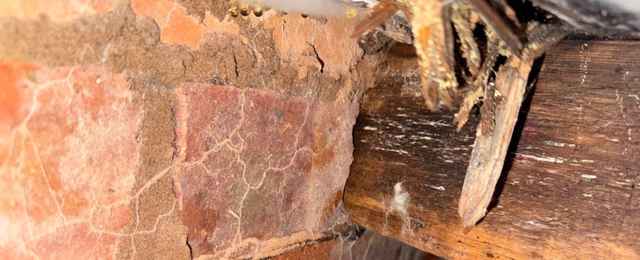
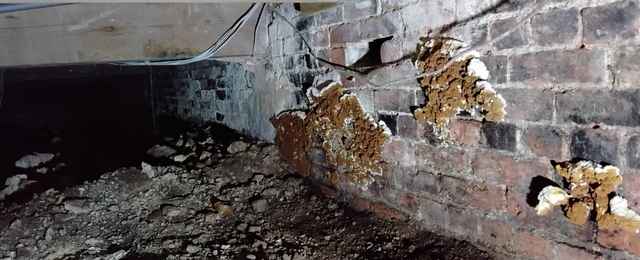
Ability to Spread: This is the defining practical difference. Wet rot remains confined to the immediate area of moist timber and will not spread once that moisture source is removed. Dry rot is different; it generates a sprawling network of mycelium and strands (‘roots’) that can grow across dry timber, behind plaster, travel through porous masonry walls, and cross steel beams or plastic piping in search of new wood to consume.
Detailed Identification Checklist for Fungal Decay
Because fungal decay typically begins in dark, unventilated spaces, knowing the specific visual indicators of each rot type can help you identify a problem and options for next steps.
1. Signs of a Wet Rot Outbreak
Wet rot is almost always directly tied to a localised structural defect, such as a missing roof tile, leaking pipe, faulty washing machine, blocked gutter, or severe condensation.
Soft, Spongy Timber: As the enzymes cellulase and lignase are excreted, the affected wood loses its structural strength, feeling soft and spongy to the touch. When it dries out, it will easily crack and crumble into thin, small fragments.
Distinct Discolouration: Depending on the specific fungus, the wood may become noticeably darker (brown wet rot) or bleached, fibrous, and stringy (white wet rot).
Thread-Like Growth: While it doesn't normally form massive fungal masses, you may notice thin, thread-like strands running along the surface of the damp wood.
Localised Odours: It produces a distinctively damp, sour, and mouldy smell closely associated with standing water or long-term leaks.
2. Signs of a Dry Rot Outbreak
Dry rot can travel undetected inside a property, completely hidden from view, only becoming visible when structural timbers begin to fail.
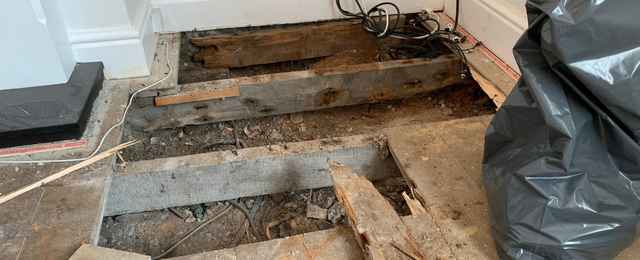
Deep Cuboidal Cracking: As the dry rot fungus utilises the enzyme cellulase to break down the wood, the timber shrinks drastically and splits into distinct, brown, cube-shaped chunks. These pieces will readily crumble into fine dust when squeezed.
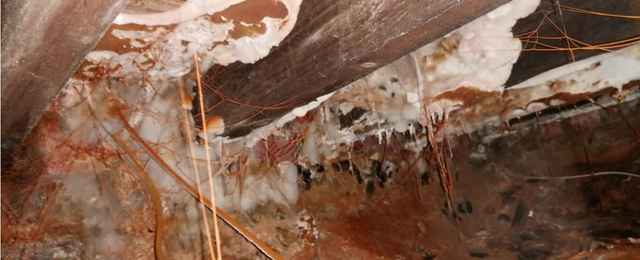
Mycelium Growth: In dark, poorly ventilated conditions, the fungus produces a dense, fluffy white growth with sulphur yellow patches that looks like cotton wool. If exposed to slightly more air, it develops into silky grey sheets with distinct lilac and sulphur yellow tinges.
Fruiting Bodies (Sporophores): When the fungus is mature or under environmental stress, it forms a large, fleshy, pancake-shaped mushroom. It features a bright rust-orange centre (where millions of spores are held) with stark white edges. As the growth is activated by light, these can appear suddenly on skirting boards or door frames.
Rust-Red Spore Dust: An advanced dry rot outbreak will coat nearby rooms, floors, and furniture in a fine layer of rust-red or orange spores shed by the fruiting body. This is a key indicator of a dry rot problem.
Pungent Mushroom Smell: Dry rot emits a heavy, deeply earthy, and mushroom-like odour that can linger stubbornly throughout a property, even in spaces that seem well-ventilated.
If you notice a thin layer of rust coloured dust, fleshy fruiting bodies and rotting timber, you should seek professional assistance as soon as possible. If left untreated, dry rot can spread throughout a property, causing significant damage.
Common Locations: Where to Look
Fungi thrive anywhere there is a lack of airflow combined with a source of ingress water.
Sub-Floor Voids
Wet Rot Vulnerability: High risk where joists touch damp masonry or if air bricks are blocked.
Dry Rot Vulnerability (Extreme Risk): If conditions allow, such as a lack of ventilation, will spread aggressively through the entire sub-floor void, destroying the structural integrity of timber.
Roofs & Attics
Wet Rot Vulnerability: Occurs locally to timbers around defective roof tiles, torn flashing, or valleys.
Dry Rot Vulnerability: Can take hold if a slow, gentle roof leak combines with completely stagnant air or if a lead trough gutter has perforated.
Bathrooms & Kitchens
Wet Rot Vulnerability: Highly common around plumbing leaks, broken sealant, and faulty appliances.
Dry Rot Vulnerability: Can establish behind tiling or under flooring if water seeps into structural partitions and there is a lack of ventilation.
Windows & External Doors
Wet Rot Vulnerability: Common on external sills and frames constantly exposed to rainwater or internal condensation.
Dry Rot Vulnerability: Rare, unless the framing links directly to a damp, unventilated internal cavity wall or a wider fungal decay outbreak.
Behind Plaster & Panelling
Wet Rot Vulnerability: Generally rare, unless the panelling is directly touching a saturated wall.
Dry Rot Vulnerability (High Risk): Mycelium and strands easily travel through mortar joints and behind lath and plaster walls to find new timber to decay.
Staircases
Wet Rot Vulnerability: Occurs if adjacent to an active plumbing leak or external rising damp.
Dry Rot Vulnerability: Common on the dark, unventilated underside of stairs fixed to a cold, damp external wall.
Which Form of Rot Causes More Damage?
While both forms of decay will completely ruin the structural stability of timber if left unaddressed, dry rot is significantly more dangerous and destructive.
Because dry rot travels through building materials that contain no wood (like brickwork, concrete, and plaster), a moisture defect located deep in a cellar can easily fuel a dry rot outbreak that climbs into the ground-floor joists and up into first-floor partitions. Furthermore, dry rot can destroy non-structural stored goods, cardboard packaging, and furnishings containing natural fibres like wool. Once sporophores are present and spores travel around the property on air currents, the infection accelerates, as now growth spreads from every germinating spore.
Wet rot remains isolated to the damp zone. However, it should never be dismissed. If a major structural leak affects an entire row of floor joists, wet rot will cause the ends of those timbers embedded in the damp masonry to decay completely, causing the entire floor to suddenly drop or collapse.
Specialist Surveys for Wet Rot and Dry Rot
Because wet rot and dry rot require completely different treatments, getting an accurate diagnosis is paramount.
Our certified property surveyors conduct a thorough damp and timber survey to fully understand the extent of the fungal decay outbreak and the source of the moisture causing the problem.
Following the inspection, you will receive a comprehensive timber report detailing our findings and a tailored remediation plan.
To find out more about how we identify structural defects and timber decay, visit our dedicated damp and timber survey page.
Timber Survey
Our experts provide detailed reports and solutions tailored to your property in Scotland.
Timber Treatments for Fungal Decay
Successfully treating wood rot requires removing the source of moisture - whether this means fixing a leak, resolving building defects such as broken guttering, or carrying out remedial damp proofing.
Simply replacing the damaged wood without eradicating the fungus and stopping the water source means any new timber installed will quickly become re-infected. Our fungal decay control measures will eliminate the root cause and protect your home for the long term.
Our repairs include:
Moisture Removal: Locating and fixing the source of moisture. This can include fixes for identified issues such as rising damp or penetrating damp, or where air circulation has been impacted and ventilation needs to be improved.
Timber Removal: Safely cutting away structurally compromised timbers and stripping back contaminated plaster.
Sterilisation & Reinstatement: Applying targeted, industry-approved fungicidal treatments for dry rot before replacing timber. Most wet rot outbreaks do not require fungicidal treatment unless the timbers are at risk during the drying period.
Long-term Guarantees: Typically, fungal decay treatments carried out by Wise Property Care are backed by long-term guarantees, giving you peace of mind that the problem is solved for good.
When you are concerned about dry rot or wet rot in your home or property, you want to use a company with experienced specialist surveyors with the right training and knowledge to reach the proper diagnosis.
Wise Property Care has both CSRT (Certificated Surveyor in Remedial Treatments) and CSTDB (Certificated Surveyor of Timber and Dampness in Buildings) qualified surveyors operating from a network of local branches, meaning no matter where you are in Scotland, we have a surveyor local to you.
Wise Property Care has been fixing timber problems and building value back into Scottish properties since 1996.
We have a proven track record working with homeowners, social housing and commercial clients across Scotland, delivering effective preservation solutions while ensuring full compliance with industry regulations and health and safety standards.
We are proud members of the Property Care Association (PCA), the trade association that governs our industry. This means you can trust you're getting professional and honest advice, and treatments following the industry best practices.
Wise Property Care is endorsed by Which? Trusted Trader - meaning our customer service and workmanship have passed rigorous trading standards assessments.